









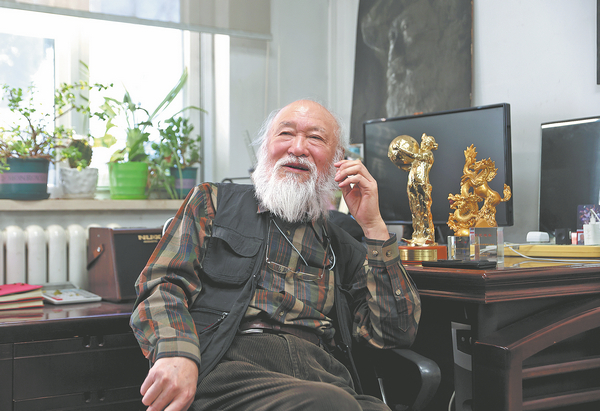
The man, wearing plain clothes, sits quietly in his office, his long white beard falling onto his chest. The room is nothing grand: it is small and a bit messy, nothing like what one might imagine as the office of the chief engineer of the China National Acrobatic Troupe. No gleaming machines, no cutting-edge devices, only a wooden desk and shelves crammed with objects that seem more appropriate for a curiosity cabinet than a laboratory.
Every corner of the room bears traces of Wang Jianmin's life's work. Open a cabinet, and you will find hundreds of neatly labeled files, each corresponding to a prop he designed over the past three decades. Together, they form a quiet archive of invention and an unspoken record of how Chinese acrobatics learned to move in new ways.
For more than 30 years, Wang, 74, has been devoted to one thing: designing acrobatic props.
"These inventions are not used as decoration, but as engines of imagination for acrobatic shows," says Wang.
In 2004, Bowls Pagoda, a production from the China National Acrobatic Troupe, stunned audiences at the Festival International du Cirque de Monte-Carlo, one of the most famous circus festivals in the world.
The performance earned the troupe its first-ever Golden Clown, the festival's highest award. Wang reimagined the traditional act by concealing folding fans inside bowls, which opened and closed automatically in rhythm with the performance, introducing a magical dimension that expanded the classic art form's expressive possibilities.
The first attempts failed. Tiny watch gears proved too unstable; the fans jammed or refused to open. One week before the competition, Wang turned to electronic controls. The solution worked. With a single thin wire, performers could trigger the movement flawlessly.
When the show began, with bowls balanced on heads and fans blooming one by one, the audience gasped. Bowls Pagoda did more than impress — it astonished. It is still one of the troupe's most popular shows, having toured the world.
In 2011, the traditional stacked-chair routine, where acrobats stack chairs vertically and balance and perform movements on top of them, won the top honor at "Le Cirque de Demain" World Circus Festival in France, as well as the top award at the China Acrobatics Golden Chrysanthemum Awards. The towering chairs swayed like slender bamboo in the wind, perilous yet mesmerizing.
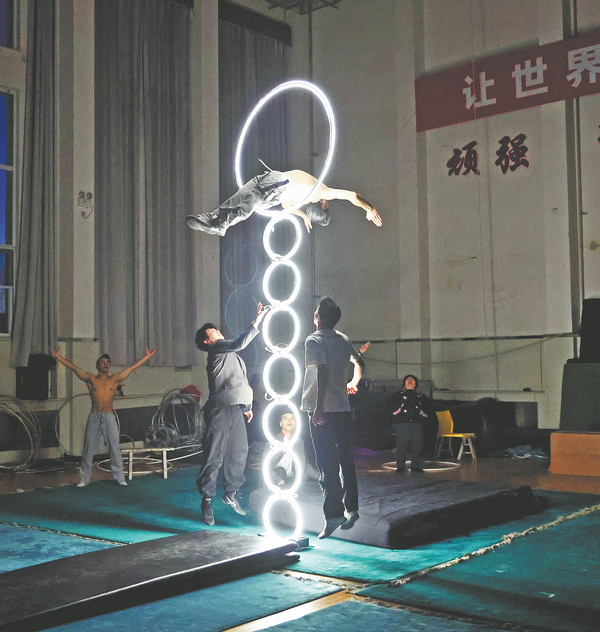
"It took a lot of patience and sleepless nights to design these inventions," Wang says.
Wang's obsession with mechanics began early. As a child, he could repair locks before he was tall enough to reach a table.
Music has always been his refuge. He loves it so profoundly that he builds his own instruments, combining sound with structure, and mechanics with melody.
Because he played the flute well, Wang joined the local art troupe in Zhaoyuan county, Heilongjiang province, in the 1970s. Touring villages, he found new areas to invent. He designed a folding mobile stage that is light, sturdy, and easy to assemble.
For a suspense play, he built a mechanical owl whose glowing eyes pierced the darkness; controlled by hidden wires, it suddenly flew into the audience, sending screams rippling through the crowd. In 1986, several of his inventions appeared simultaneously in major exhibitions in Harbin, causing a stir among per forming arts groups.
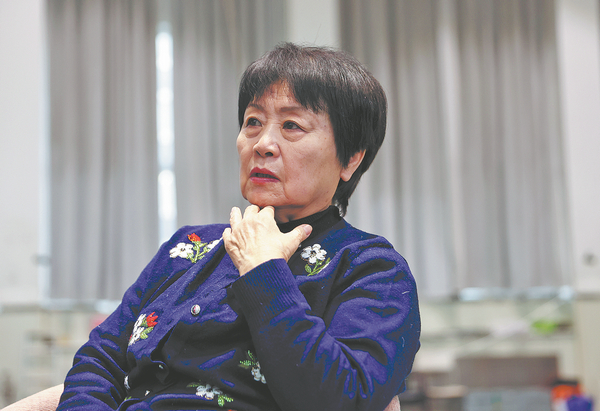
A turning point came in 1992. Sun Lili, then an acrobat and now the creative director of the China National Acrobatic Troupe, spotted one of Wang's creations during a trip to Harbin. She immediately recognized his rare talent. With her recommendation and institutional support, Wang joined the troupe in 1994.
After joining, Wang faced his first challenge: designing a new circus tent. It had to be safe, lightweight, and easy to assemble and dismantle. Wang produced six proposals and hundreds of drawings. He barely slept. The result was China's first modern circus tent, using motors instead of manual lifting, and a reengineered frame and seating system. It weighed only half as much as traditional tents and supported more than 800 performances nationwide.
Through mechanics, electronics, and an unrelenting curiosity, Wang has helped reshape how acrobatics are conceived and performed.
His creations have altered the rules of the art form, as Sun puts it.
"When everyone else takes the wide door, you take the narrow door — that's innovation." Innovation is the lifeblood of acrobatic development, in Sun's perspective.
Chinese acrobatics has endured for over 3,000 years. How does it maintain its freshness? Wang's answer is unwavering: innovation begins with tools; avoid what feels familiar; chase what has never been seen. "Not the first," he repeats. "The only."
Contact the writer at chennan@chinadaily.com.cn

Presented by Chinaculture Registration Number: 京ICP备13028878号-4
Copyright © Ministry of Culture and Tourism, P.R.China. All rights reserved
Presented by Chinaculture Registration Number: 京ICP备13028878号-4
Copyright © Ministry of Culture and Tourism, P.R.China. All rights reserved







 京公网安备 11010502035176号