









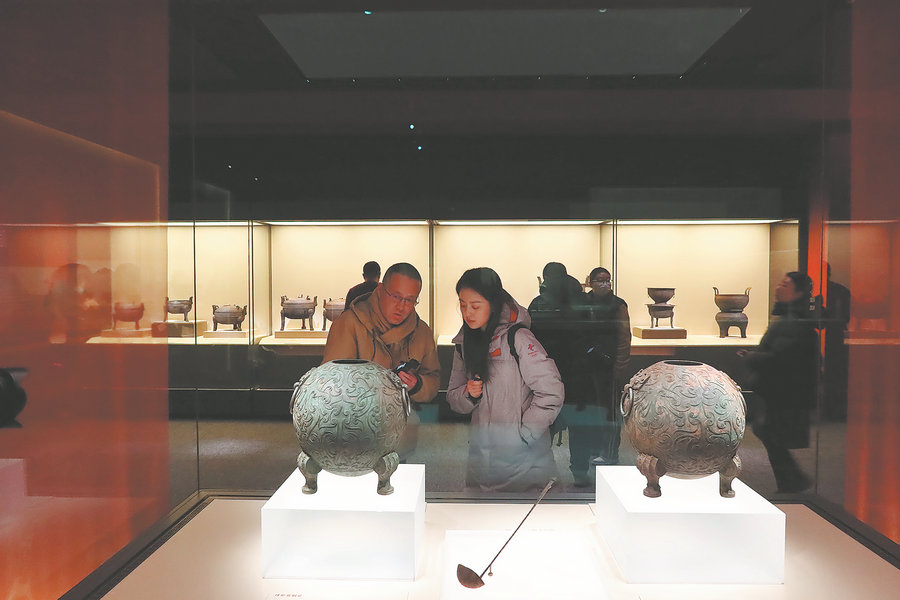
In 238 BC, Xiong Yuan — known to history as King Kaolie of the Chu state — died as the power he ruled slipped into decline under the mounting pressure of its formidable rival, the Qin state.
He had inherited from his father a regional sovereignty whose origins could be traced back to the Zhou Dynasty (c. 11th century-256 BC). Rising in what is today Hubei province, the Chu state expanded northward and eastward, flourishing as one of the seven powerful vassal states during the Warring States Period (475-221 BC).
King Kaolie presided over Chu during a time of flux and uncertainty, witnessing both its endurance and its erosion. Through careful diplomacy, he attempted to guide the state through shifting alliances, territorial concessions and military threats. Yet, his industrious efforts ultimately failed to reverse Chu's historical trajectory.
About 15 years after his death, Chu was conquered by Qin armies, clearing the way for the founding of the Qin Dynasty (221-206 BC), the first imperial dynasty of a unified China. As centuries passed, King Kaolie's prominence as a key figure of his era faded into the margins of historical memory.

Presented by Chinaculture Registration Number: 京ICP备13028878号-4
Copyright © Ministry of Culture and Tourism, P.R.China. All rights reserved
Presented by Chinaculture Registration Number: 京ICP备13028878号-4
Copyright © Ministry of Culture and Tourism, P.R.China. All rights reserved







 京公网安备 11010502035176号