









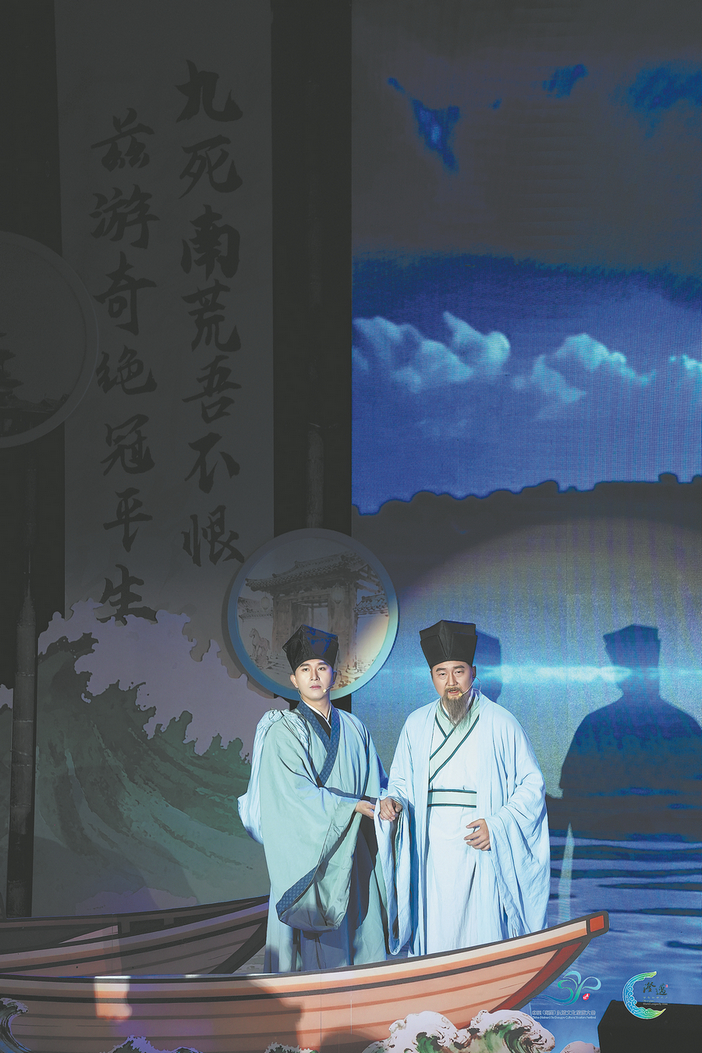
During Su Dongpo's exile in Hainan, the renowned Song Dynasty (960-1279) literatus left behind not only a profound cultural legacy but also vivid personal anecdotes that reveal his resilience, brotherly love, and deep engagement with local life.
1. The Agarwood Mountain: a gift of solace
When Su Dongpo learned that his younger brother, Su Zhe, was about to turn 60, a significant milestone in Chinese tradition, he was determined to send a meaningful gift despite his impoverished exile. He sought out a precious piece of agarwood naturally shaped like a mountain ridge.
With this gift, he composed the prose poem On the Qualities of Agarwood in which he imbued the fragrant wood with the virtues of a noble gentleman: steadfastness, integrity, and detachment from worldly ego. Through this gift, Dongpo aimed to comfort and inspire his brother, who was also enduring political hardship, reminding him to remain resilient and true to his principles.
2. The "secret" delicacy: roasted oysters
A celebrated gourmand, Su Dongpo found culinary delights even in the remote tropics. In his lighthearted essay Eating Oysters, he described how a local coastal resident gifted him fresh oysters. He experimented by stewing the meat and juices with wine and roasting the larger ones over an open fire, marveling at their unique flavor.
In a playful postscript, he warned his son, Su Guo, not to spread word of Hainan's delicious oysters, joking that scholars still in office might hear of it and clamor to be exiled there, too. The tale reflects both his adaptive optimism and his witty, self-mocking humor in the face of adversity.
3. The medicinal Inquiry: a scholar's herbal notes
Despite personal troubles, Su Dongpo maintained a scholarly curiosity and concern for people's wellbeing.
In his Notes on the Yizhi Plant, he documented the growth habits of the yizhi plant (Alpinia oxyphylla) and the medicinal use of its fruit, known as yizhiren (black cardamom). He noted its efficacy in treating urinary ailments but, skeptically, observed that, despite its name yizhi, which means "boost intelligence" in Chinese, it did not actually enhance wisdom. He concluded with a characteristically reflective question: "Can intelligence really be found in medicine?" This blend of empirical observation and philosophical doubt underscores his practical and inquisitive spirit.

Presented by Chinaculture Registration Number: 京ICP备13028878号-4
Copyright © Ministry of Culture and Tourism, P.R.China. All rights reserved
Presented by Chinaculture Registration Number: 京ICP备13028878号-4
Copyright © Ministry of Culture and Tourism, P.R.China. All rights reserved







 京公网安备 11010502035176号