









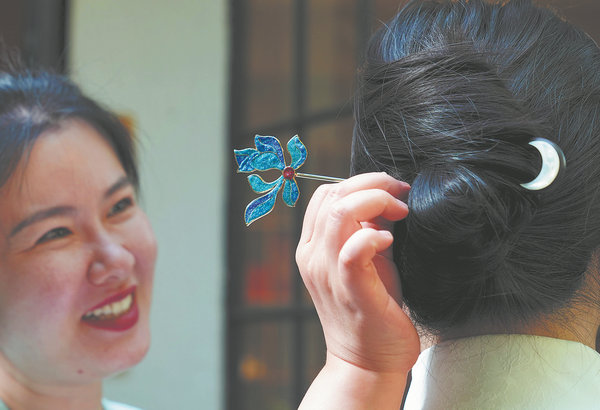
In the cosmetics section of a department store in Lanzhou, Northwest China's Gansu province, Wang Xiaoxia, a resident of Zhangye city in Gansu, bypasses the prestigious international brands to reach the Maogeping counter, a Chinese makeup brand renowned for its "Eastern aesthetics".
Over 1,400 kilometers away in Beijing, white-collar professional Dew Zhang observes that passing by the Lao Pu Gold store in Wangfujing invariably means navigating a snaking queue, drawn by the brand's handcrafted gold jewelry featuring traditional Chinese motifs. "People say they love its craftsmanship," she remarks.
A decade ago, such scenes would have been hard to imagine. China's affluent consumers were synonymous with a voracious appetite for Western luxury, equating foreign logos with status.
Today, a subtle but profound shift is underway. A new generation of consumers and the creative industries that serve them are quietly rewriting the rules of cultural engagement, turning inward for inspiration while looking outward with unprecedented ambition.
This quiet confidence found a roaring voice in 2025, not in propaganda, but in a constellation of cultural products, from billion-dollar blockbusters to scented candles, that are redefining "Made in China".

Presented by Chinaculture Registration Number: 京ICP备13028878号-4
Copyright © Ministry of Culture and Tourism, P.R.China. All rights reserved
Presented by Chinaculture Registration Number: 京ICP备13028878号-4
Copyright © Ministry of Culture and Tourism, P.R.China. All rights reserved







 京公网安备 11010502035176号