









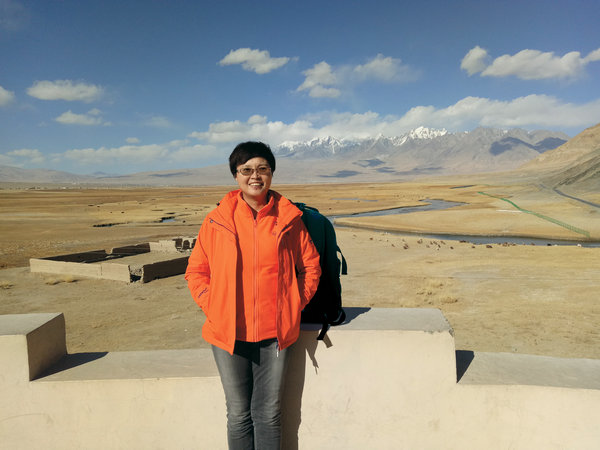
Northwest China's Xinjiang Uygur autonomous region has made significant archaeological progress over the past five years, according to Li Wenying, a deputy to the regional legislative body.
Li has been an archaeologist for more than three decades and has been involved in many of the most important excavations in the region. She recently transitioned from a position as director of Xinjiang's Institute of Cultural Relics and Archaeology to become deputy director of the region's Qiuci Academy.
During an interview on the sidelines of the annual regional legislative session in Urumqi on Tuesday, Li highlighted that throughout her career, 12 projects from Xinjiang have made it onto China's annual list of top archaeological discoveries.
Over the past five years, Li and colleagues — in collaboration with institutions such as the National Center for Archaeology, the Chinese Academy of Social Sciences' Institute of Archaeology, Peking University and Northwest University — have conducted more than 80 proactive archaeological excavations at 24 key sites across Xinjiang, yielding a series of academically and socially significant results.
For example, the 883 paper documents and wooden slips unearthed from the Tang Dynasty (618-907) Kiyakkuduk beacon tower site in Yuli county vividly illustrate the work and life of frontier garrison soldiers.
She added that they have been working with related institutions to promote the display of archaeological discoveries, establishing national Great Wall cultural parks and building themed museums. Some ten thousand unearthed artifacts have been added to museum collections and exhibitions over the past five years.
According to a government work report delivered to the session on Tuesday, museums and memorial halls across Xinjiang received over 45 million visits in the past five years.
The report stated that this year, the region will further advance archaeology and cultural heritage preservation, interpreting historical narratives and artifacts that highlight interactions and exchanges among various ethnic groups, and telling the story of Chinese culture in vivid, tangible ways — through objects, sites and lived experiences.

Presented by Chinaculture Registration Number: 京ICP备13028878号-4
Copyright © Ministry of Culture and Tourism, P.R.China. All rights reserved
Presented by Chinaculture Registration Number: 京ICP备13028878号-4
Copyright © Ministry of Culture and Tourism, P.R.China. All rights reserved







 京公网安备 11010502035176号