









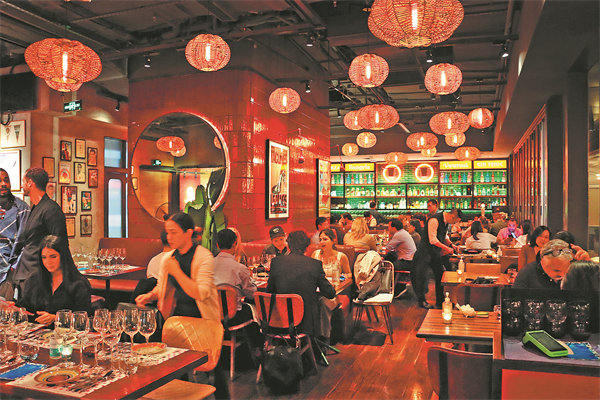
During the Chinese New Year holiday, the festival will feature special events divided into two phases. From Feb 14 to 23, restaurants will offer reunion dinner sets and holiday menus. The second phase, from Feb 24 to March 3, will focus on creating experiences for returning Shanghai residents and their visiting friends and families.
"We've launched two special set menus with a 30 percent discount, including our signature dishes and some new elements to echo the Chinese New Year atmosphere," says Gu Qiqi, manager of Il Teatro Italian restaurant.
Gu also notices an increase in international visitors, particularly since September, attributing it in part to China's expanded visa-free policies.
Recent data support this observation. Statistics from the Shanghai General Station of Immigration Inspection show that Shanghai ports processed over 5.6 million foreign passengers last year, an increase of nearly 40 percent year-on-year, with 3.29 million utilizing visa-free and 240-hour transit policies.
The event extends beyond dining to create a comprehensive cultural experience, as its activities are integrated into city tours and establish "Food+" consumption clusters within three kilometers of festival venues.
"We're making food tourism a new path to activate consumption potential and refresh urban tourist experiences," says Jin Lei, deputy director of the Shanghai Municipal Culture and Tourism Bureau.
The initiative has developed 186 tourism routes incorporating Western restaurants and will integrate hotels, museums, performance venues, and digital cultural experience centers to offer seasonal menus and joint promotions.
For industry veterans like Liu of Scarpetta Trattoria, the festival represents Shanghai's culinary coming-of-age. "Shanghai's international restaurant scene already leads China," he says. "I hope this festival will inspire more restaurants and chefs to elevate international dining to truly world-class standards."
Fernandez also shares this sentiment: "Shanghai remains a fertile ground of opportunity for international cuisines." He adds, "Today's consumers expect genuinely memorable dining experiences. Success will depend on thoughtfully adapting to local diners' evolving tastes while maintaining consistency in quality and depth in culinary offerings."
Wu Wanzhen contributed to this story.

Presented by Chinaculture Registration Number: 京ICP备13028878号-4
Copyright © Ministry of Culture and Tourism, P.R.China. All rights reserved
Presented by Chinaculture Registration Number: 京ICP备13028878号-4
Copyright © Ministry of Culture and Tourism, P.R.China. All rights reserved







 京公网安备 11010502035176号