









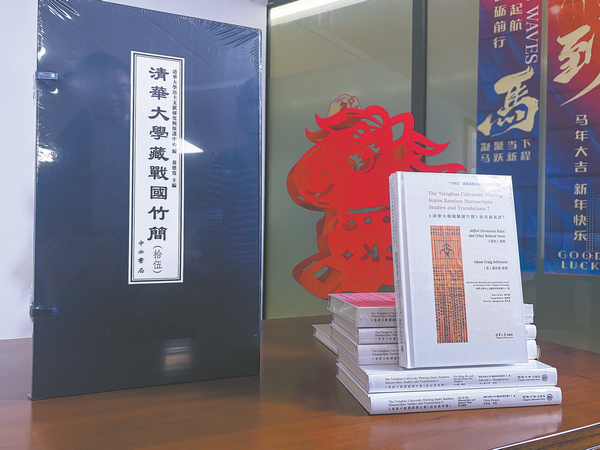
Fan Ma Zhi Ji consists of 24 bamboo slips, with the 13th slip missing, leaving 23 slips in existence. It systematically records various equine diseases and their symptoms, making it the earliest known specialized document on horse treatment. This is of great significance for the study of the history of veterinary medicine in ancient China, Jia says.
The Xun Ma section, preserved on 12 bamboo slips, summarizes practical experience in horse training. It focuses on methods for training horses and regulating their feed and water, and maintaining their health, underscoring the importance of systematic and scientific care.
Yu Shu, made up of 38 bamboo slips, offers a comprehensive introduction to mastering horse riding based on the animal's body movements. It fills a gap in the ancient Chinese literature on horse riding skills and provides rare insight into the practical meaning of "driving" as one of the "Six Arts", says researcher Shi Xiaoli.
The final manuscript, Yu Ma Zhi Dao, contains 12 bamboo slips that focus on the general principles of horse riding. It compares the art of riding to governing a country and managing people, advocating a balanced approach of "gradual and steady advancement, combining benevolence with authority".
The ideas in this section closely align with the Legalist school of thought prevalent during the Warring States Period, including those of thinkers like Shen Dao, Shen Buhai, and Han Feizi, says researcher Cheng Hao, in his presentation.

Presented by Chinaculture Registration Number: 京ICP备13028878号-4
Copyright © Ministry of Culture and Tourism, P.R.China. All rights reserved
Presented by Chinaculture Registration Number: 京ICP备13028878号-4
Copyright © Ministry of Culture and Tourism, P.R.China. All rights reserved







 京公网安备 11010502035176号