









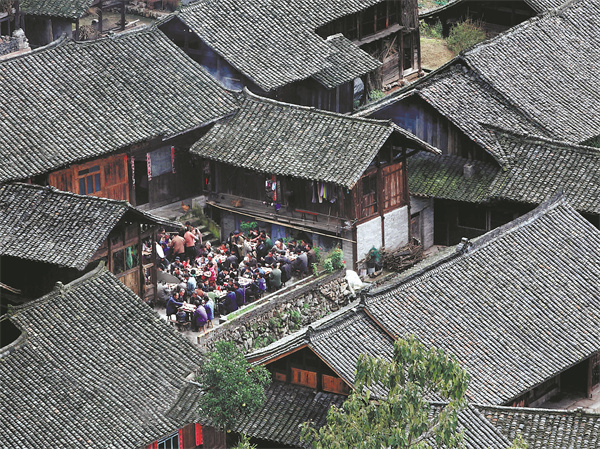
The program meets twice a week for different age groups and gives each student a chance to participate.
The lessons, which started in 2022, combine on-site instruction about village relics, visits from intangible heritage bearers, and training for students to serve as junior guides.
"My grandmother said that when she was a child, she went to opera performances. Because she was short, she kept stepping back until she stood in a puddle and soaked her trousers," says 12-year-old Zhou Tingjiayi. The stage she described, now a playground for kids, was built in 1916, according to records, and performances are still held on holidays and during festivals.
The curriculum stresses village wisdom as much as relics. Teachers have revived the shuochun tradition, a singing and spoken form once used to announce seasonal work, urging people to plow and offer blessings for good weather and harvests.
Zhou Zhengbing, the only remaining master of shuochun in Loushang, performs excerpts for students and leads discussions on the agricultural calendar, local geography and blessing rituals embedded in the songs. Children who have never seen or heard the tradition ask inquisitive questions.
"This system embodies a rational use of seasonal rhythms and respect for nature," Quan says, stressing that passing on local wisdom matters more than rote learning.

Presented by Chinaculture Registration Number: 京ICP备13028878号-4
Copyright © Ministry of Culture and Tourism, P.R.China. All rights reserved
Presented by Chinaculture Registration Number: 京ICP备13028878号-4
Copyright © Ministry of Culture and Tourism, P.R.China. All rights reserved







 京公网安备 11010502035176号