









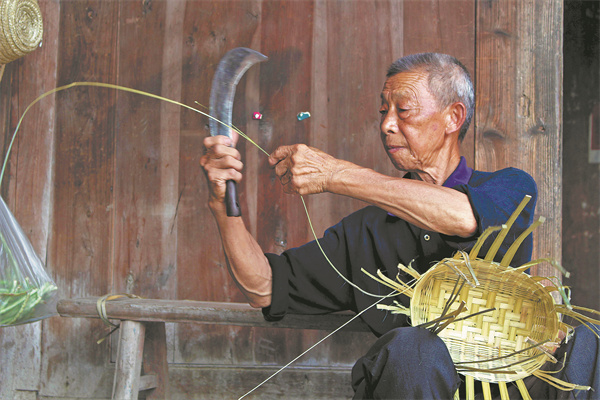
"We gradually adopted the idea of living conservation," says Hou Shi, an associate professor at Fudan. "We started with buildings, and then conducted systematic surveys of village history, landscapes and surrounding plants, inviting residents to use classrooms, have festivals, and create memories to pass on traditions to younger generations."
Residents, particularly students, have been deeply involved over the past decade. For Du, young people are the inheritors and transmitters of culture. Yet, should they fail to identify with their native history, traditional skills, and village landscape, the heritage risks becoming a mere static exhibit.
Memories matter. Children in the village now talk about its buildings and folk culture as readily as they do school lessons. For them, the shared memories of family and place are part of daily life.
"Our teacher Quan taught us the difference between tangible and intangible cultural heritage. She took us to every corner of the village and told us to ask our grandparents for stories about the village," says 13-year-old Zhou Ziyu.
Quan Yixian, who holds a doctorate in cultural heritage and museology from Fudan, and several other members of the university have been teaching heritage classes in the township's primary school in Loushang for many years.

Presented by Chinaculture Registration Number: 京ICP备13028878号-4
Copyright © Ministry of Culture and Tourism, P.R.China. All rights reserved
Presented by Chinaculture Registration Number: 京ICP备13028878号-4
Copyright © Ministry of Culture and Tourism, P.R.China. All rights reserved







 京公网安备 11010502035176号