









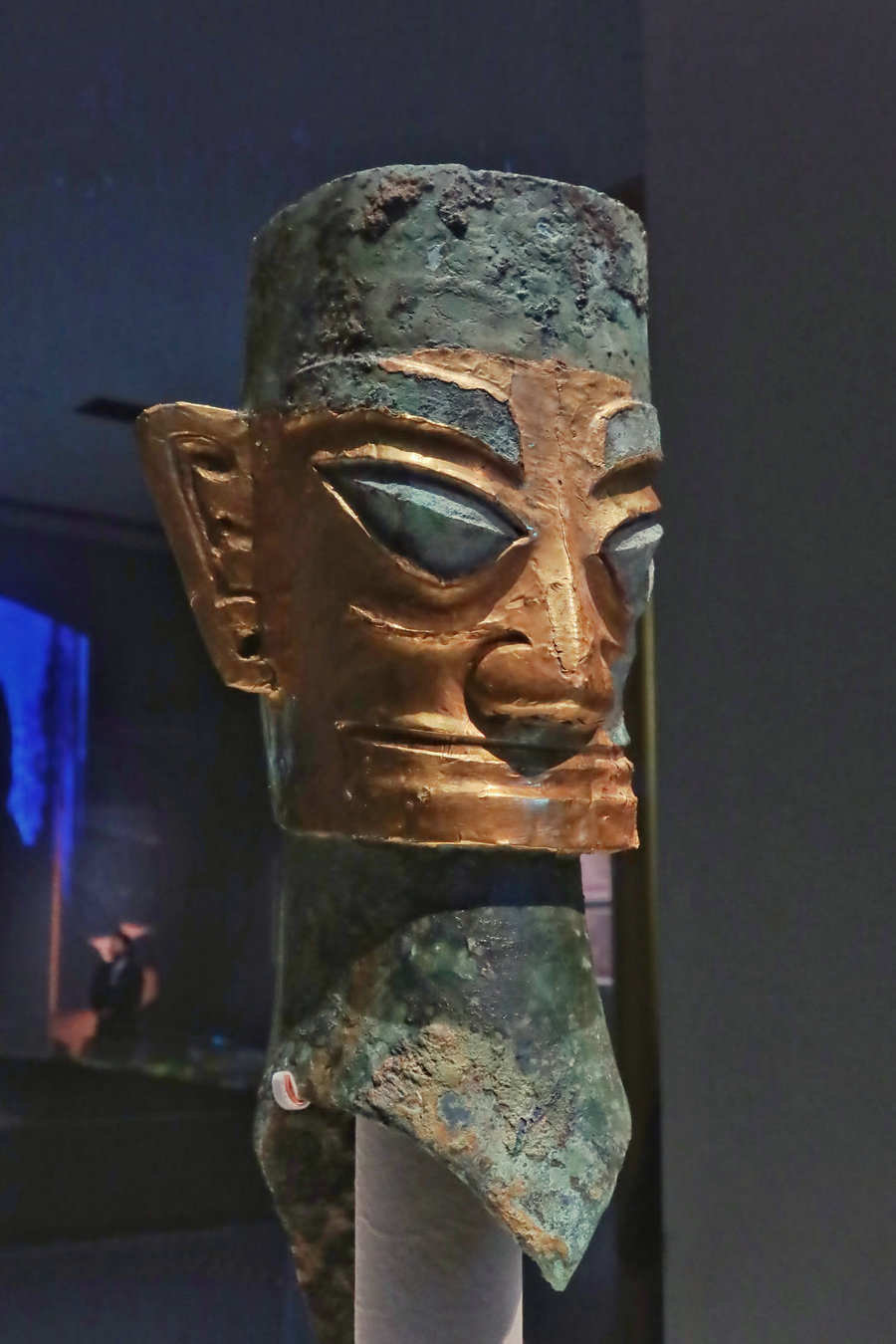
As radiant as the gold sun god-bird ornament, as uncanny as the bronze head crowned with a gold mask and prismatic eyes, and as enigmatic as the sun-shaped bronze vessel, some of the most dazzling relics of ancient Shu culture, dating back more than 4,000 years, have traveled from their homes at the Sanxingdui and Jinsha sites, in Sichuan province, to Beijing.
Over 200 artifacts are on display at the National Museum of China, where the ongoing exhibition, Twin Stars Illuminating the World, illuminates a small corner of the large, thick veil of the ancient Shu state.
Through these remarkable objects, the exhibition vividly evokes the daily life and spiritual world of the Shu people, while tracing their interactions with other flourishing cultures across the land. Together, the displays underscore the grandeur of Chinese civilization, shaped by harmony amid diversity.
Running for about seven months, the exhibition also invites visitors into lively discussions and speculation, as many unsolved questions surrounding Sanxingdui and Jinsha remain, with excavation and research still underway.

Presented by Chinaculture Registration Number: 京ICP备13028878号-4
Copyright © Ministry of Culture and Tourism, P.R.China. All rights reserved
Presented by Chinaculture Registration Number: 京ICP备13028878号-4
Copyright © Ministry of Culture and Tourism, P.R.China. All rights reserved






 京公网安备 11010502035176号