









Sichuan
Songs in ethnic languages are evolving from regional cultural expressions into sources of creative inspiration for the younger generations.
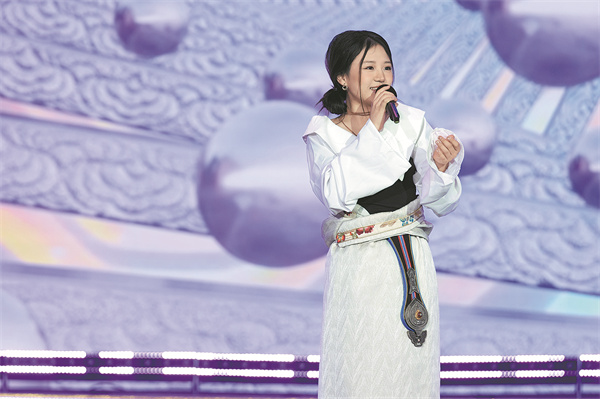
Sidan Mamcu, a Gen Z singer-songwriter from the Jiarong Tibetan community in Aba Tibetan-Qiang autonomous prefecture, Sichuan province, fuses the Tibetan language with global music genres in her work.
Raised in an ethnically musical family, she feels a natural intimacy when singing in Tibetan, a language she describes as being closer to the sky, evoking openness, resonance, and emotional depth.
For Sidan Mamcu, the dialect itself is inherently musical."The tones already carry melody," she said. "You don't need special techniques. Just speak the words, find the tune, and it flows."
Even listeners who don't understand the lyrics often connect instinctively with the sound and cultural atmosphere of her songs.
In recent years, Sidan Mamcu has gained attention for her original Tibetan-language music that blends traditional vocal styles with Afrobeat, electronic music, and hip-hop.
Her recent song, Sa Sa Sa, tells the story of a Tibetan girl awakening to her own agency. "From my grandmother to my mother to me, each generation breaks through a little more," she said. "Now, my generation can explore and create more broadly and become who we truly want to be."

Presented by Chinaculture Registration Number: 京ICP备13028878号-4
Copyright © Ministry of Culture and Tourism, P.R.China. All rights reserved
Presented by Chinaculture Registration Number: 京ICP备13028878号-4
Copyright © Ministry of Culture and Tourism, P.R.China. All rights reserved







 京公网安备 11010502035176号