









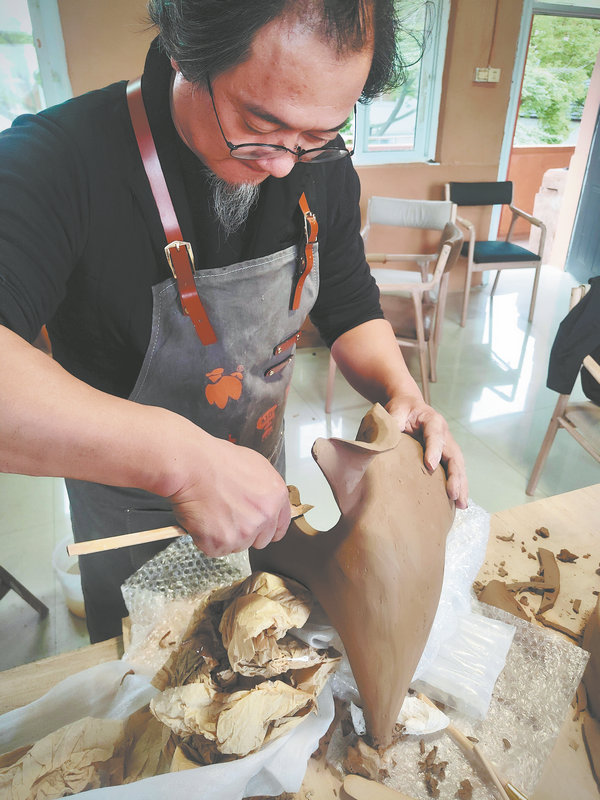
Song Qiujun, a design engineer from Shanghai's Jinshan district, is committed to reviving black pottery, an ancient craft with a 5,000-year history across China.
Black pottery is a prominent variety and a brilliant achievement in Chinese pottery-making, and stands as one of the nation's cultural symbols of primitive society and ancient civilization. It is considered a pinnacle of ceramic craftsmanship following painted pottery and possesses major historical significance and rich cultural connotations.
Black pottery is also regarded as a representative of Liangzhu culture (3300-2300 BC), a Neolithic period that existed in the Yangtze River Delta region, which is known for its sophisticated jade carving.
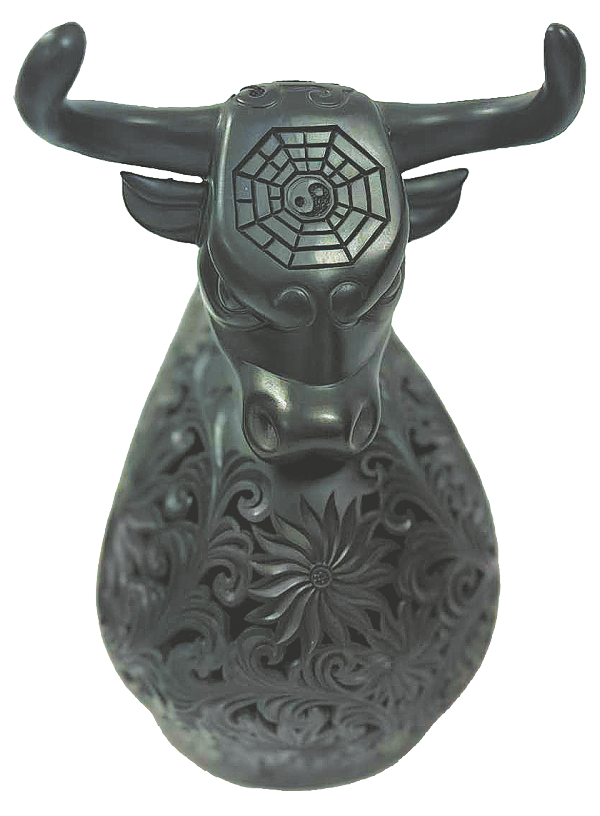
Pottery ware of this kind is typically made of gray clay, featuring bright, refined surfaces and uniquely structured shapes. Since ancient times, scholars and poets have praised it as "black yet translucent, gleaming like gold" and described it as "sturdy as iron yet as lustrous as jade".
Tinglin town in Jinshan district has unearthed a large number of exquisite black pottery artifacts from the Neolithic period in Liangzhu, which serve as vital clues in deciphering the region's historical and cultural heritage. However, the craft was nearly obsolete in the late 1990s for a myriad of reasons.
It is also around that time that Song's career began taking off. After graduating from school in 1999, he stepped into the building decoration industry. He started his own business in 2003 and raked in millions of yuan over the following year. While continuing his commercial success, Song always felt an attachment to his hometown and the district's cultural roots. For him, a district's unique cultural identity is just as important as its economic triumph.

Presented by Chinaculture Registration Number: 京ICP备13028878号-4
Copyright © Ministry of Culture and Tourism, P.R.China. All rights reserved
Presented by Chinaculture Registration Number: 京ICP备13028878号-4
Copyright © Ministry of Culture and Tourism, P.R.China. All rights reserved







 京公网安备 11010502035176号