









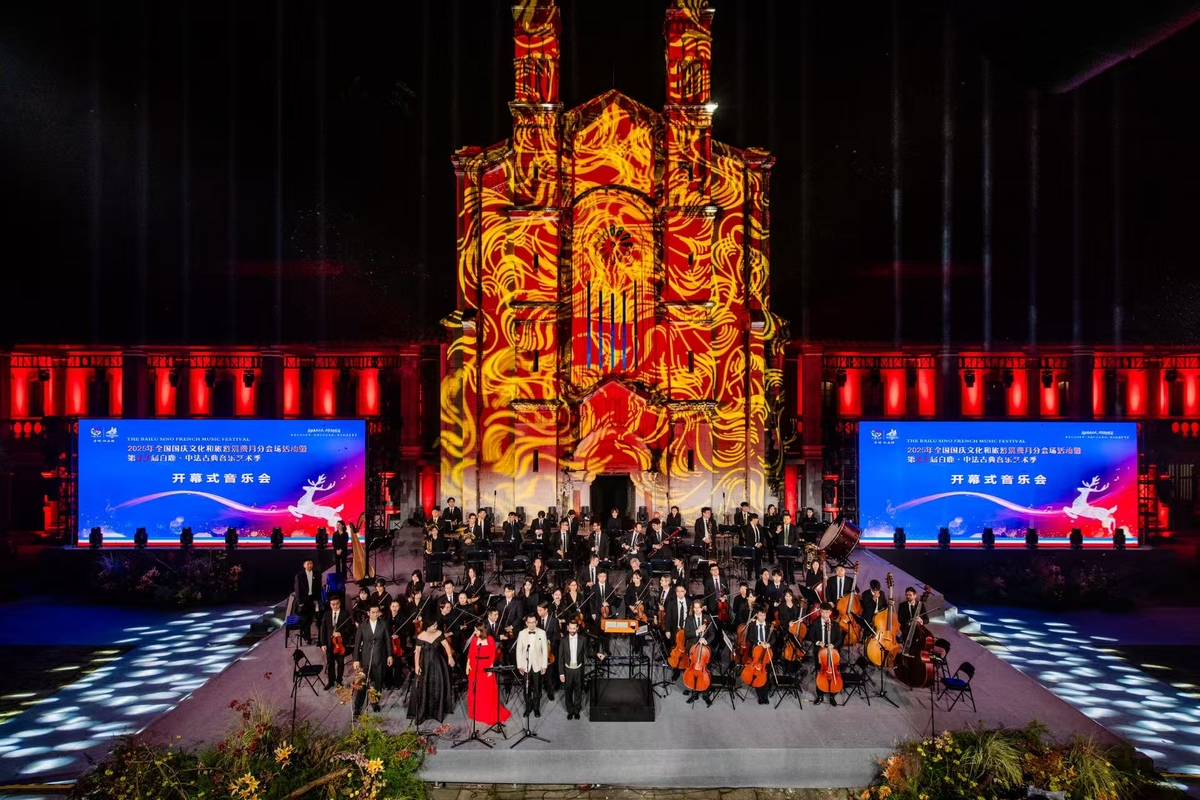
Like stepping into a quaint French vignette, visitors are greeted by sun-drenched red-brick walls, pastel-hued facades, arched windows and steep mansard roofs, a captivating ambiance reminiscent of a tranquil bourg in the French countryside.
Yet this scene unfolds not in provincial France, but in Bailu, a mountain town less than two hours' drive from Chengdu, capital of Southwest China's Sichuan province.
The French influence first took root here during the late Qing Dynasty (1644-1911), when missionaries arrived and built churches, schools and other facilities, planting the early seeds of cultural convergence.
After more than a century, the town's unique legacy of Sino-French cultural exchange endures, a heritage that weathered the devastating 2008 earthquake and now serves as a cornerstone of its revival, symbolizing cross-cultural ties between the two countries.
In 2008, the Wenchuan earthquake reduced much of the town to rubble, but swift reconstruction efforts laid the groundwork for a revival centered on its distinct cultural identity.
"The post-quake reconstruction plan prioritized leveraging Bailu's cultural heritage and historical sites to boost tourism," said Liang Xiao, Party chief of Bailu. "Schools, hospitals and streets were redesigned in European architectural styles to create a coherent French ambiance for visitors."
Today, Bailu stands as a national 4A-level scenic spot and a vibrant hub of Sino-French cultural exchanges, particularly in music.

Presented by Chinaculture Registration Number: 京ICP备13028878号-4
Copyright © Ministry of Culture and Tourism, P.R.China. All rights reserved
Presented by Chinaculture Registration Number: 京ICP备13028878号-4
Copyright © Ministry of Culture and Tourism, P.R.China. All rights reserved







 京公网安备 11010502035176号