









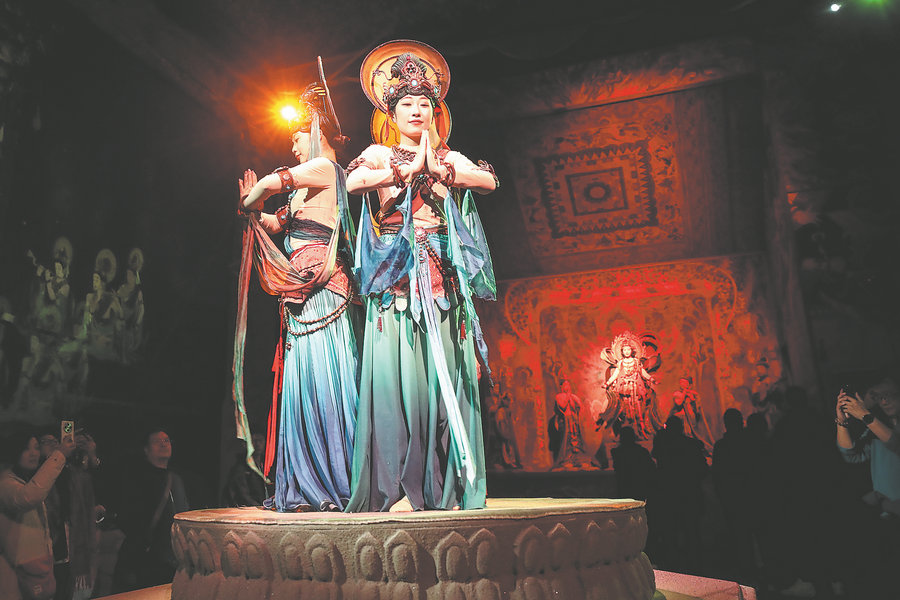
The recommendations also propose enhancing the convenience and internationalization of inbound tourism, promoting the deep integration of culture and tourism, vigorously developing cultural tourism, and empowering economic and social development through cultural means.
Liu Feng, executive president of the China Chamber of Tourism with the All-China Federation of Industry and Commerce, says the recommendations outline top-level design, strategic pathways, and key directions for the cultural and tourism industry over the next five years.
Building China into a leading tourism nation is the core objective, and the plan emphasizes deepening the integration of culture and tourism as a central pathway driven by technological empowerment and aligning with national strategies such as rural vitalization, domestic demand expansion, and the promotion of Chinese civilization, Liu explains.
Liu notes that the 15th Five-Year Plan period represents a critical transitional phase, bridging past achievements with future goals.
While facing a complex and evolving external environment, he points out that China possesses four significant advantages: the institutional strengths of socialism with Chinese characteristics, a massive domestic market, a comprehensive industrial system, and a rich pool of talent.
The foundational conditions for development remain stable, with numerous strengths, strong resilience, and vast potential, ensuring that the fundamental positive trends remain unchanged, he says.

Presented by Chinaculture Registration Number: 京ICP备13028878号-4
Copyright © Ministry of Culture and Tourism, P.R.China. All rights reserved
Presented by Chinaculture Registration Number: 京ICP备13028878号-4
Copyright © Ministry of Culture and Tourism, P.R.China. All rights reserved







 京公网安备 11010502035176号