









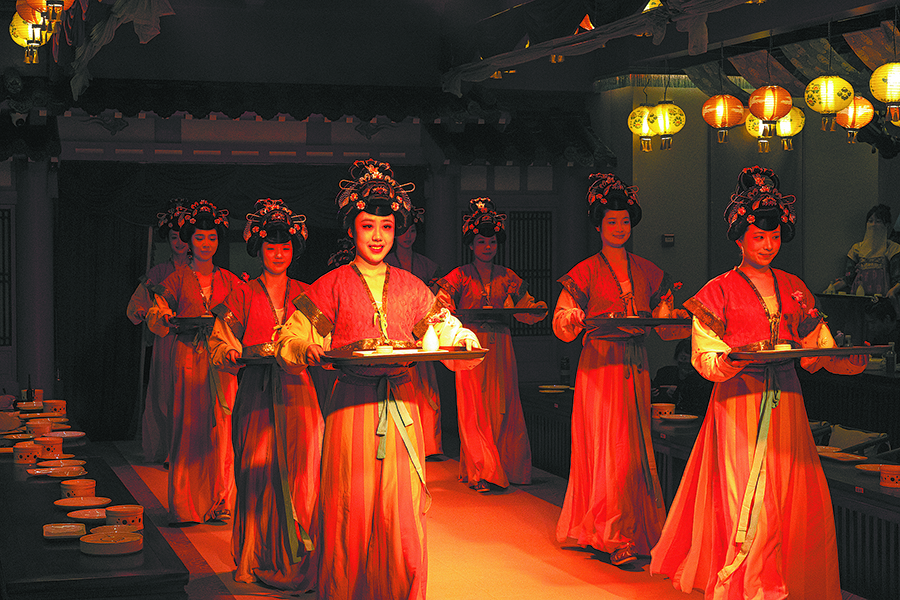
The lantern light flickers, casting dancing shadows on stone as a woman in elegant, flowing silks in the style of the Southern Song Dynasty (1127-1279) glides forward to greet guests at a palace-like restaurant in Jianou city, north of eastern Fujian province.
She recites a welcome in ancient verse before leading them through a luminous tunnel that evokes a feeling of traveling back in time to Jianzhou (established prefecture), Jianou's historical name a thousand years ago.
Before them, a panoramic LED screen, stretching an impressive 28.8 meters, unrolls like a living scroll, depicting the bustling markets, teahouses, and waterways of ancient Jianzhou.
It makes for a vivid opening to the Jianzhou Grand Feast, a 30-million-yuan ($4.2 million) immersive cultural dining spectacle that has, since its opening about three months ago, become a popular local tourist spot.
"We have been seeing a steady flow of visitors on weekends and holidays," notes Sun Ze, the restaurant's marketing director.
The restaurant taps into the profound history and culture of ancient Jianzhou, which has passed down the legacies of Zhu Xi's Neo-Confucianism and the Song Dynasty's Beiyuan imperial tea.
"Traditional cultural tourism often remains passive — it's static observation — but we think that enjoying food, something that is a common factor throughout history, can become the ultimate cultural medium," he explains.
"We wanted the weighty culture of Jianzhou to step out of the history books and become an immersive experience modern consumers can eat, see and participate in."
Nearly 1,500 kilometers to the northwest, in the ancient capital of Xi'an in Shaanxi province, a Tang Dynasty (618-907) scene also comes to life over the dining table.
Sun Ting, director of Fu Rong Yan Restaurant's seasonal aesthetic dining show, has witnessed similar robust demand.
"It is common to have our weekend shows fully booked a week in advance and we operate double sessions daily for lunch and dinner, since we launched over half a year ago," Sun Ting states.

Presented by Chinaculture Registration Number: 京ICP备13028878号-4
Copyright © Ministry of Culture and Tourism, P.R.China. All rights reserved
Presented by Chinaculture Registration Number: 京ICP备13028878号-4
Copyright © Ministry of Culture and Tourism, P.R.China. All rights reserved







 京公网安备 11010502035176号