


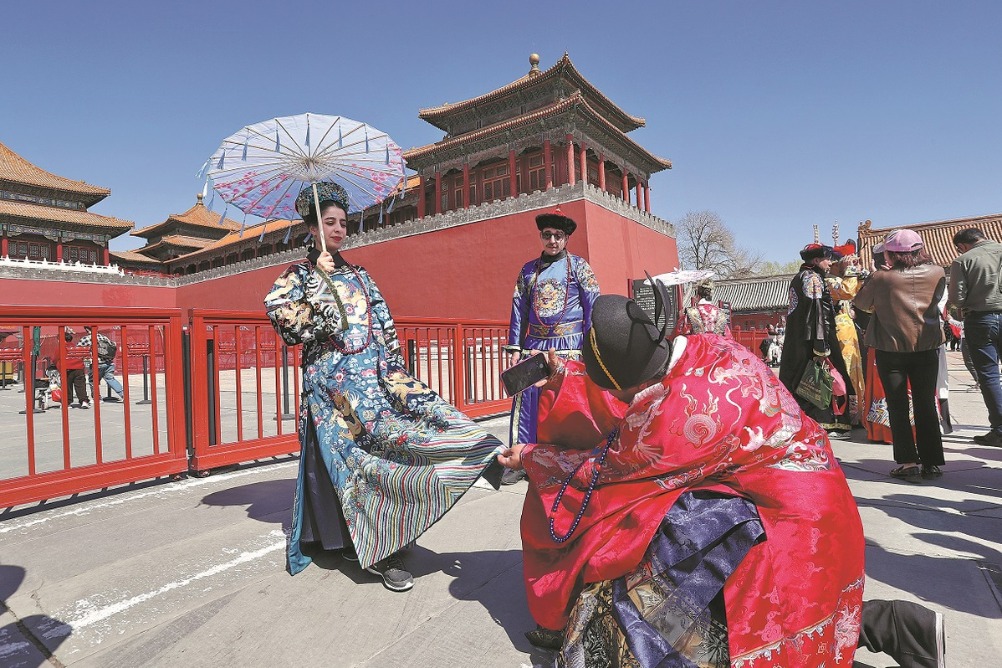
Last month, senior tour operator Iain Bell traveled from the United Kingdom to China at the invitation of Beijing tourism authorities to sample the capital city's cultural and historical charms.

Former imperial site in Vietnam leaves an intriguing opportunity for cross-border cooperation, reports Wang Kaihao in Hanoi.

As the birthplace of the CPC, city witnessed historical revolution and development, Zhang Kun reports.

Breaking will debut as one of the competitive events at the Paris Olympics this year, the first time a dance sport has ever been included in the Olympic Games.

Music lovers in Shanghai will be able to attend more live music performances from the students and faculty of the Tianjin Juilliard School. On May 26, a chamber concert at Zikawei Library announced the continual communications between the prestigious music institute and Xuhui district in Shanghai.
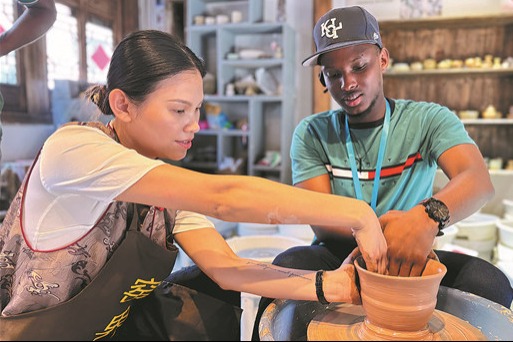
Participants from a number of countries on the continent find opportunities to take home from event held in Jinhua, Zhejiang province, Xing Wen reports.

The film made its grand premiere in Beijing on Wednesday, attracting fervent fans who paid homage by dressing up as beloved characters like Furiosa and the menacing warlord Dementus.

On Monday, the contemporary Peking Opera spectacle, Xiong'an Family, graced the stage in Rongcheng county of Xiong'an New Area, situated in North China's Hebei province, showcasing a tale of familial bonds and adaptation in the evolving landscape of the region.

As summer approaches, Beijing's dining scene is abuzz with exciting new offerings to delight diners during the sunny season.

The much-anticipated reality show Random Tour made its debut on the video-sharing platform Mango TV, featuring a dynamic ensemble of young celebrities embarking on a journey to uncover the hidden gems of various cities throughout China while crafting innovative travel guides.

Michelin recently unveiled the 2024 edition of the prestigious Michelin Guide Guangzhou at the Shangri-La Hotel in Guangzhou, Guangdong province.

The gripping Chinese suspense series, Regeneration, has captivated audiences worldwide since its early May debut on Youku's overseas platform and Netflix, resonating with viewers across 190 countries and regions. This revelation came to light during a seminar held in Beijing on Tuesday, underscoring the show's broad international appeal.

Presented by Chinaculture Registration Number: 京ICP备13028878号-4
Copyright © Ministry of Culture and Tourism, P.R.China. All rights reserved
Presented by Chinaculture Registration Number: 京ICP备13028878号-4
Copyright © Ministry of Culture and Tourism, P.R.China. All rights reserved



 京公网安备 11010502035176号