
 |
|
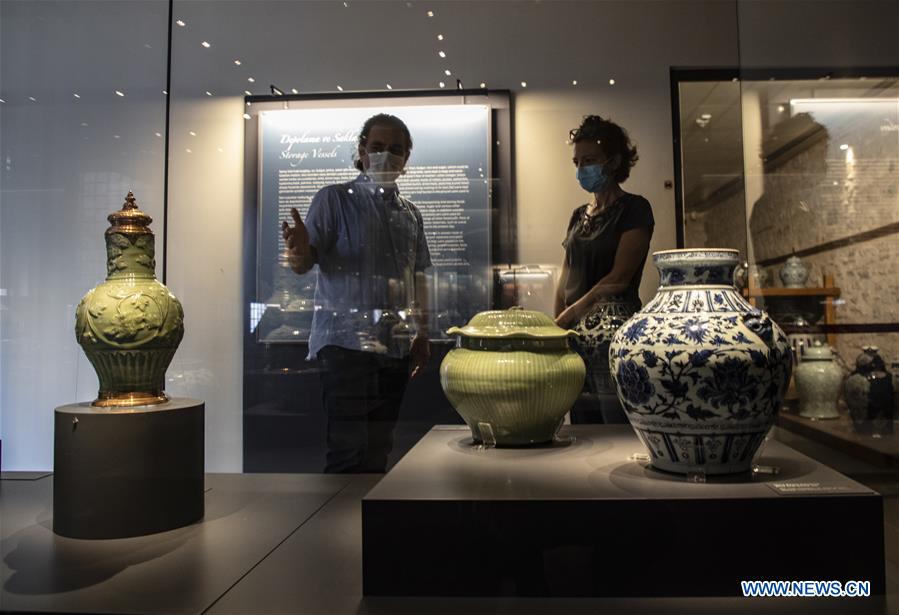
Visitors look at exhibits during an exhibition of Chinese porcelain at the Topkapi Palace Museum in Istanbul, Turkey, on Oct 2, 2020. A nearly 12,000-piece collection of Chinese porcelain is on display in the Topkapi Palace Museum, revealing an uninterrupted historical chronology of the evolution of Chinese porcelains from the 13th to the 19th century.[Photo/Xinhua] |
"They also loved the yellow ones, which were known as the Emperor's yellow, and they were using these pieces during Muslim's holy Ramadan, as the color was symbolizing both the nobility and also simplicity," Tufan added.
Later in the 16th century, Chinese artists started to write some verses from the Quran over the porcelains. During this period, the Muslim countries and the Ottoman Sultans purchased many samples to be used as dinner sets, Tufan added.
Deniz Esemenli, a retired academic and writer of several books on Ottoman history, said Chinese porcelains dominated and adorned not only the Ottoman palaces but the entire world until the 16th century.
"China initiated and significantly contributed to the development of porcelain production in the Ottoman Empire," Esemenli told Xinhua.
"Starting from the 19th century, Turkish artists have produced many pieces by imitating Chinese patterns, and mostly inspired by the blue and white samples," he said.

Presented by Chinadaily.com.cn Registration Number: 10023870-7 京ICP备13028878号-4
Copyright © Ministry of Culture and Tourism, P.R.China. All rights reserved





 京公网安备 11010502035176号