
 |
|
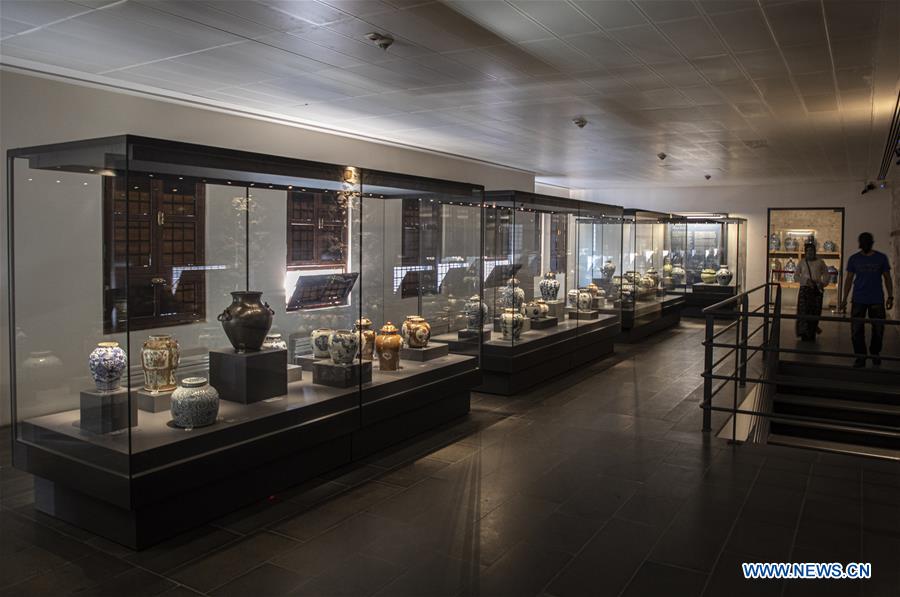
Photo taken on Oct 2, 2020 shows an exhibition of Chinese porcelain at the Topkapi Palace Museum in Istanbul, Turkey. A nearly 12,000-piece collection of Chinese porcelain is on display in the Topkapi Palace Museum, revealing an uninterrupted historical chronology of the evolution of Chinese porcelains from the 13th to the 19th century. |
Tufan remarked that some of these pieces were presented as gifts from high-level state men or foreign diplomatic missions, and a significant part of the collection was transferred from China to the palaces through the ancient Silk Road.
"Until the early 1700s, China was the only porcelain producer in the world, and the pieces it produced were very precious known as White Gold," he continued.
"Ottoman Empire, on the other hand, did not know how to make it as they were not familiar with the technology. Therefore, the Sultans were very keen on these products, attributing great importance to using them as a symbol of nobility," Tufan noted.
According to Tufan, one of the most preferred types of Chinese porcelains in the palace kitchens was celadons because they were believed to change color or get cracked when poison was added.
"For this reason, the Sultans usually were eating their meals in the plates made of celadon," he said.

Presented by Chinadaily.com.cn Registration Number: 10023870-7 京ICP备13028878号-4
Copyright © Ministry of Culture and Tourism, P.R.China. All rights reserved





 京公网安备 11010502035176号