
 |
|
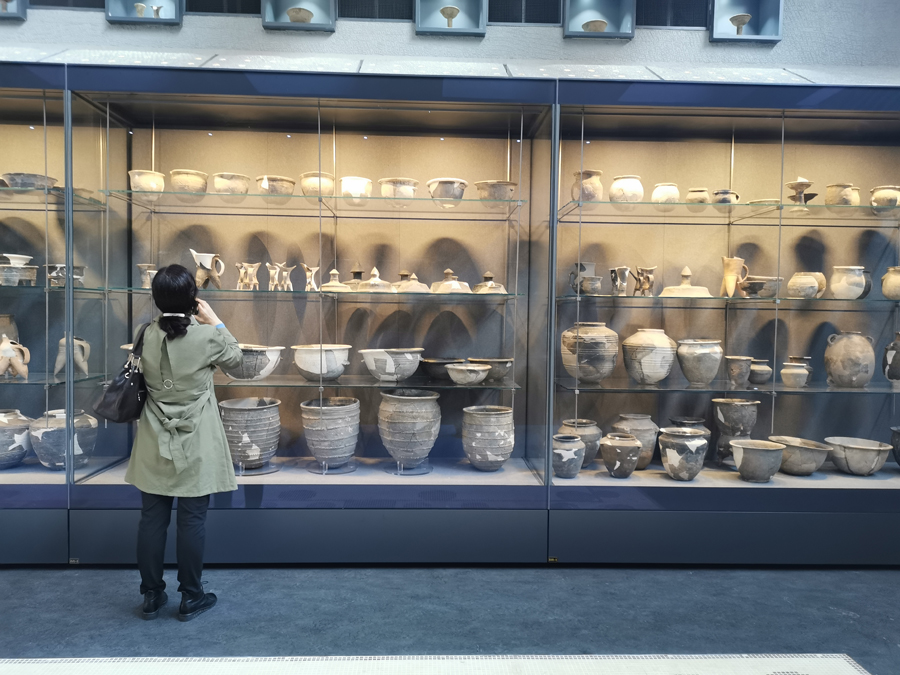
A visitor views pottery pieces on display in the newly opened Erlitou Site Museum of the Xia Capital in Luoyang, Henan province. [Photo by WANG KAIHAO/CHINA DAILY] |
According to the conclusion of that program, and based on a rigorous analysis of historical records, archaeological findings and astronomical records, the Shang people were found to have toppled the Xia Dynasty in around 1600 BC.
Li Boqian, a professor of archaeology at Peking University, was the chief scientist of the program. He cites their work as key to defining the Xia Dynasty as a proven historical fact.
"The richness of the historical records about ancient China were an advantage for us archaeologists, rather than a burden," Li says. "Erlitou was a key witness to the transition from the Xia Dynasty to the Shang era.
"During later archaeological analysis of the Erlitou site, we found a lot of evidence indicating social upheaval-such as former palaces being abandoned-at a time when Shang culture began to surface," he explains.
"However, the Shang Dynasty allowed Xia loyalists to remain in the area, and that's why their residence continued for a longer period of time."
While it remains controversial as to whether the Shang city near Erlitou is Xibo, their affinity at least shows that the Shang people wanted to keep a close eye on those loyal to the former dynasty in case of a rebellion, Li adds.
"The Shang city could also be a military fort used for surveillance," he says.
Chen Xingcan, director of the Institute of Archaeology of CASS, says naming the new museum Xia Capital represents a mainstream view and will help the general public to understand the importance of the site, but it does not mean the end of the discussion.

Presented by Chinadaily.com.cn Registration Number: 10023870-7 京ICP备13028878号-4
Copyright © Ministry of Culture and Tourism, P.R.China. All rights reserved






 京公网安备 11010502035176号