The courageous, strict, and serious generals; the cavaliers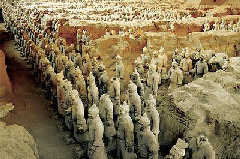 awaiting their orders; the infantry wearing their armors and holding their weapons; the archers holding their bows and looking straight at the enemies; as well as the brave horses all constituted a magnificent force, emitting a sense of masculinity, bravery, and power.
Gazing at the spectacular pottery troops of more than two thousand years ago, modern visitors are brought back to wars and flames at the end of theWarring States Period(475-221BC), and are much impressed by the invincible Qin troop that virtually made a clean sweep of their enemies, even if the troop is just made of pottery.
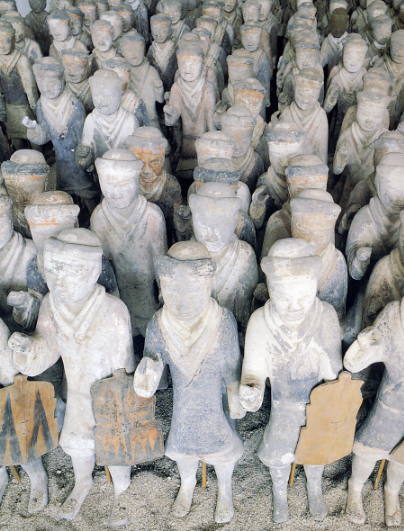
By theHan Dynasty(206BC-220AD), the social economy had recovered from the wounds of long-time wars, and the society had also experienced substantial developments in many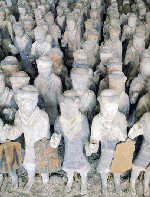 aspects, which also contributed to cultural characteristics different from those of theQin Dynasty(221-207BC). The content and artistic styles of the pottery works were also in turn different from that of the Qin Dynasty.
Whether the pottery works featured humans or animals, the emphasis of the works was no longer as realistic as in the Qin Dynasty. Instead of attaching great importance to lifelikeness and details, the pottery and porcelain works during the Han Dynasty paid more attention to grasping the spiritual content of the works, and emphasized the use of gestures and facial expressions. The bold, unconstrained, flowing, and flexible style also echoed the aesthetic taste of the Han Dynasty.
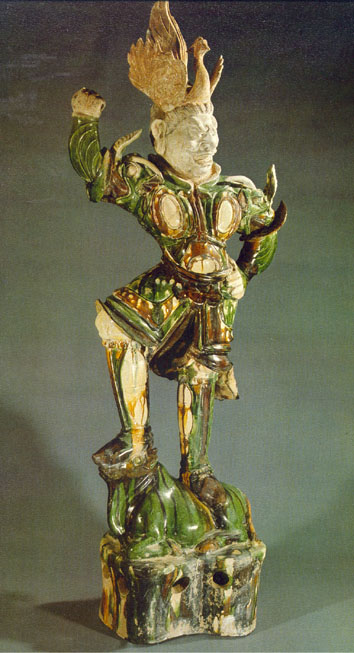
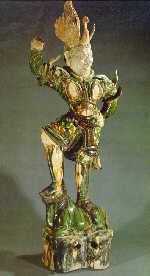 The "Tang Tri-color pottery," with its excited, high-spirited, magnificent, and intense-colored style, resembled the time spirit of theTang Dynasty(618-907), when China was the leading and most open civilization in the world.
The pretty and handsome ceramics of the Song Dynasty (960-1279) embodied the aesthetic standards and philosophical notions of the time.
The multicolored, soft, delicate, and exquisite porcelains of the Ming and Qing dynasties (1368-1911) were the results of changing social lives and aesthetic notions.
Since the implementation of the Reform and Open-up policy by thePeople's Republic of China(1949-) in 1978, the bold and unrestrained style of the pottery and porcelain works have reflected the changes in the politics, notions, and lives of the society.
 Related Link











 Email to Friends
 Print
 Save