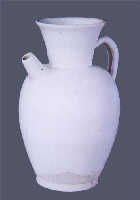
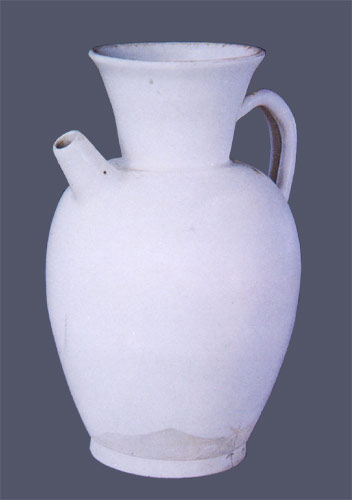
 White porcelain was invented during the Northern Dynasties (386-581).
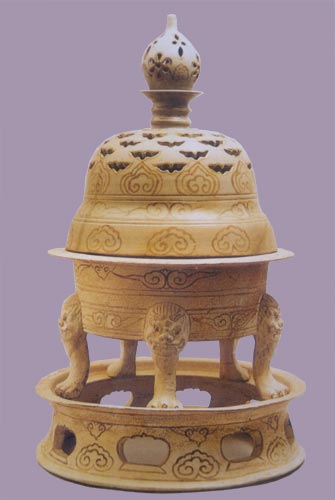
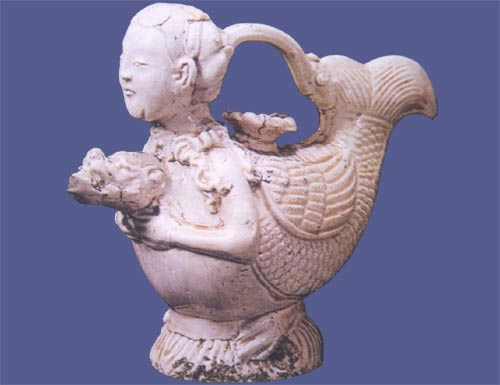
It was in the Sui and Tang dynasties that porcelain became more varied and colorful. Glaze ingredients containing different metal oxides became available to produce brilliant underglaze (pre-glaze) colors via firing.
During the lateTang Dynasty, theFive Dynasties(907-960), and early in the Song Dynasty, Yue ware celadon (from the Yuezhou kilns aroundShaoxinginZhejiang Province), with a fine paste, had "the verdure of a thousand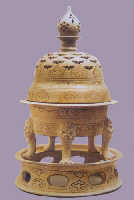 mountain peaks" and was "like dewy budding lotus flowers." The feudal ruling class monopolized this exquisite ware, known as "porcelain of secret color" (the olive-green of fine Yue ware), as tribute to the Imperial Court.
In the Song Dynasty, porcelain kilns mushroomed in different places, while porcelain schools representative of particular regions appeared. Before the Song Dynasty, porcelain was decorated by carved, incised, and impressed designs. That is, before the paste was dried, designs were carved or incised with a knife on the unglazed body or impressed with stamps for mass production and then glazed for firing.
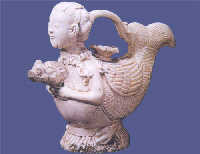 In the Song, Liao, (916-1125), and Jin (1125-1234) dynasties, decorative designs were painted over the glaze, black designs or red and green patterns on white porcelain, with this painting on porcelain marking an entirely new stage in Chinese porcelain art.
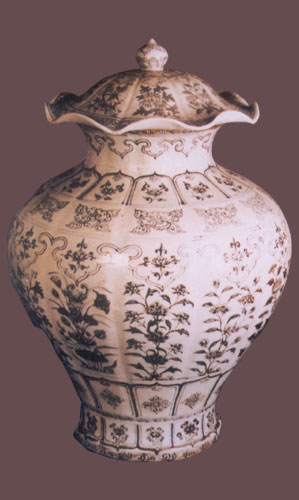
TheYuan Dynasty(1271-1368) saw continuous new developments in the art of porcelain making which contributed to different types of famous wares.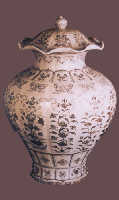
Porcelain-manufacturing craft attained its acme in Chinese history in the Ming and Qing dynasties (1368-1911). This was shown in a tremendous variety of vessel shapes, lustrous colors, and splendid designs made possible by the fine texture of the paste, adequate firing, abundance of pigments, improvement of craftsmanship, and various social influences of the time. Apart from exquisite patterns, Ming porcelain decoration featured landscapes, portraits, and flower-and-bird and other paintings, while most of the Qing paintings on porcelain were works of famous contemporary artists or imitations of their works.










 Email to Friends
 Print
 Save