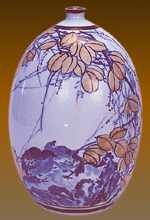
In 1979 Jingdezhen blue-white porcelain won a national golden prize and in 1985 it was honored with three gold medals at international fairs held in Leipzig, Brno, etc. Since then, the name "Jingdezhen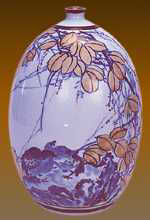 Blue-white Porcelain" has spread far and wide. By far, it is a top product in the porcelain business, boasting the most prizes andhighest standards.
 Color-glazed porcelain
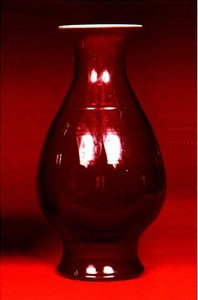
 was one of Jingdezhen's major products during the Yuan, Ming and Qing dynasties. It was colored using both high-temperature and low-temperature glazes, with copper, iron, or gold as the color agent. From the time of the Yongzheng and Qianlong reigns, iron has successfully been utilized for its even, clear and stable glaze qualities. Red porcelain has always been the most popular since the Chinese consider red an auspicious and precious color.
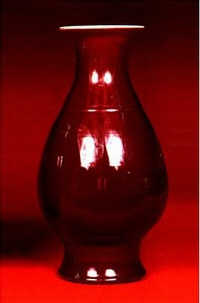 Reputed as a "manmade gem", color-glazed porcelain looks brilliant and seems to carry many connotations. Thanks to new scientific measures for allotting ingredients and controlling kiln temperatures, craftsmen have not only managed to improve the quality of color glazes and find formulas for different products, but they have also successively created more than 100 glaze colors and several kinds of lusterless colored glazes.
Generally speaking, color-glazed porcelain falls into the following categories: blue, dark reddish, black, white, yellow, green, blue-and-white glazed, and so on, with each color further subcategorized into specific type.
Collectors of different types of color-glazed porcelain should keep one thing in mind: The classification of color glazes cannot be judged based on the color of a glaze surface with the naked eye. For instance, although some blue-and-white glazes produced in kilns inFujian Provinceduring the Song Dynasty appear to be white, the proportion of different microelements classifies them as white-and-blue glazed porcelain.
 Related Link










 Email to Friends
 Print
 Save