Grain-sized holes were hollowed out in the thin roughcast and the glaze was applied several times to cover them. Then, the half-finished products were baked in kilns to producelinglongporcelain.
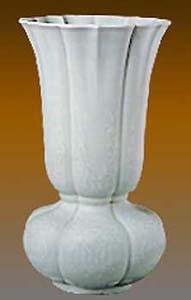
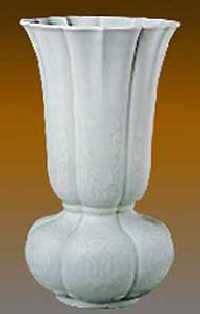 Characterized by pierced ornamentation, the porcelain saw some developments in terms of technique in the Qing Dynasty. During this period, craftsmen ingeniously integrated the techniques of making blue-and-white porcelain with that oflinglongporcelain to create the blue-and-whitelinglongporcelain much loved by the people. The dark-green transparentlinglongdesigns and emerald-green blue-and-white patterns served as a foil to each other, creating a unique sense of beauty.
Linglongwares were generally limited to small objects, such as cups, brush pots and covered jars. The decoration was sometimes unglazed, left either white or enhanced with gilding or colored glazes.
 Blue-white porcelain
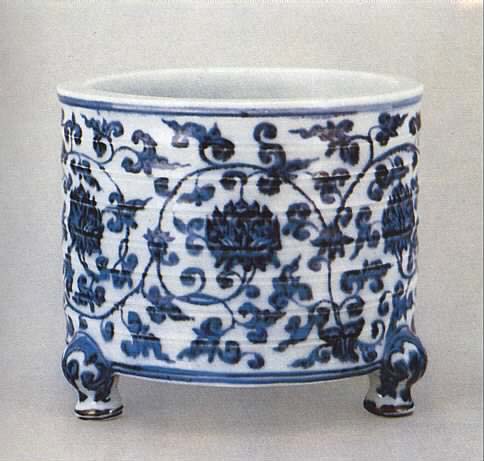
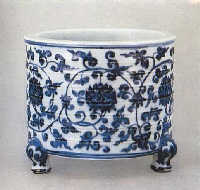 Among all porcelain produced in Jingdezhen, the most representative is blue-white porcelain. Baking blue-white porcelain originated in theNorthern Song Dynasty(960-1127). During the Yuan and Ming dynasties (1271-1644), blue-white porcelain became increasingly popular, and since the 14th century, manufacturers have shipped blue-white porcelain to world markets. The porcelain reached its peak in the Qing Dynasty (1644-1911). Its thin, translucent quality and exotic motifs made it very valuable throughout Europe and the colonies, ranking first among blue-white porcelain nationwide.
Drawing the design with a cobalt pigment onto the stoneware body and painting over it with a transparent glaze creates the blue-white style, also known as "underglazed blue". The piece is then fired at a high temperature. Blue-white porcelain was introduced during theYuan Dynasty(1271-1368) and has been in production ever since thanks to its bright colors, simple yet elegant patterns, and smooth glaze that never fades.










 Email to Friends
 Print
 Save