Qingjing Mosque
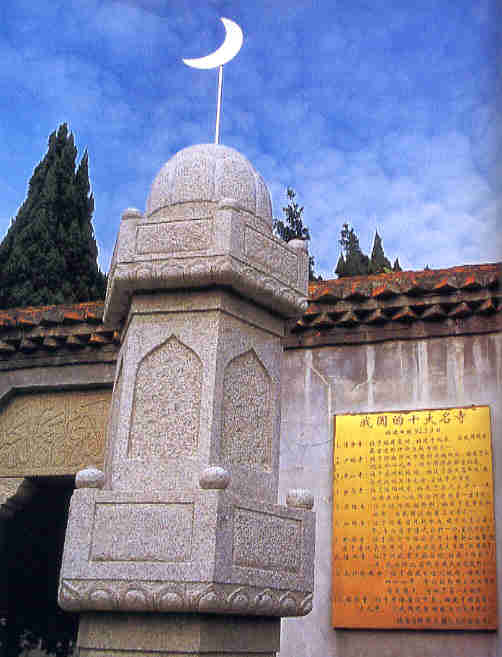
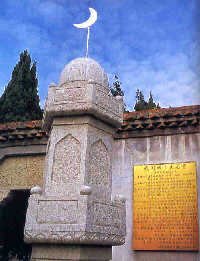 The Qingjing Mosque (literally thePure and Clean Mosque) was built in 1009 on present-day Tumen Street, covering 2,100 square meters. As the oldest existing mosque in China and well known to the Islamic world, it was designed after the mosque in Damascus of Syria and built with pure granite. Its pointed-arch portal, 20 meters high, has three layers. The outer and middle layers are similar to the caisson ceiling in Chinese ancient architecture. The vaulted inner layer took on the architectural style of ancient Arab. It is clear that architecturally, the mosque is a combination of Chinese and Islamic styles. Standing under the vault, one can realize the time-honored cultural exchanges between China and foreign countries.
 Qingyuan Mountain Scenic Area
The scenic area, standing 3 kilometers to the north of Quanzhou as a natural defense, is made up of the mountains Qingyuan, Jiuri, and Lingshan. It is known for its 36 exotic rocks and limpidsprings. Of the 18 best scenic spots, the most famous include the Laojun Rock at the foot of Mountain Qingyuan and the Holy Islamic Tombs at the southern foot of Mountain Lingshan.
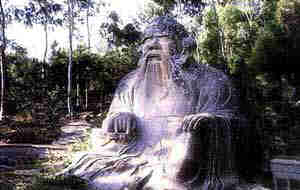
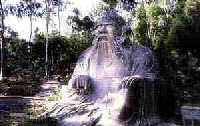 The 5-meter-high Laojun Rock is the biggest stone statue ofLao Zi, the founder and Saint of Taoism. The sitting statue was carved out of a natural rock duirng the Song Dynasty (960-1279). Lao Zi's left hand rests on his lap, and his right hand, on a small table. His ears reach the shoulder, white beard floats in the air, and face beams with happiness and kindness.
The figure has become a symbol of health and longevity. As the saying goes in Quanzhou, "Touch the nose of the Stone Old Saint, and you'll live up to 120 years old," which entices many tourists to have a try.
The two Holy Islamic Tombs are where the third and fourth disciples of the Islamic prophet Mohammed -- who traveled with difficulties to Quanzhou across the vast ocean to preach -- were buried after death. Their tombs are the oldest and best-preserved Islamic holy resting places in China. In the shape of a crescent, the winding stone corridor at the holy tombs signifies the purity and holiness of the disciples.










 Email to Friends
 Print
 Save