 Quanzhou Maritime Museum
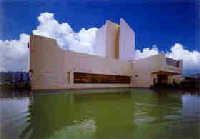 The best place to trace Quanzhou's ancient maritime prosperity is the Quanzhou Maritime Museum in Fengze District. It is the only maritime museum in China, with two sites -- the old one in the KaiyuanTempleand the new one in the East Lake, built in 1959 and 1991 respectively. From the hundreds of thousands of cultural relics like real boat parts, stone, wooden and iron anchors, and models of sea boats through the dynasties, the rises and falls of ancient port city Zaitun are vividly revived.
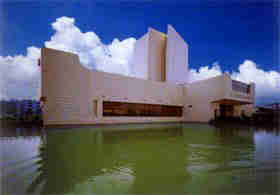
The new site, in the shape of a giant sea boat to set sail, boasts four exhibition halls: Hall of Quanzhou Port & Ancient Sea Transportation, Hall of Quanzhou Ancient Boat Models, Hall of Religious Stone Inscriptions, and Hall of Quanzhou Folk Culture. The famous statue of Vishnu (one of the three major Hindu gods) exhibited is the only Indian relic existing in China, a testimony of the Sino-India cultural exchange in the 14th century.
The Hall of Quanzhou Ancient Boat Relics in the Kaiyuan Temple boasts a giant V-shaped sunken boat of the Song Dynasty (960-1279) unearthed in 1974 from the sands of Houzhu Harbor in Quanzhou Bay, the remains of which are 24.2 meters long and 9.15 meters wide with 13 cabins. With the bows restored, the magnificent appearance of the Fujian-style ship with its raised prow and stern can once again be seen. The large round keel, the hull's structure, and multiple planking conformation, the fine rigging and the oval mast step are all visible in this remarkable exhibit.
Other relics and models represent such historic events as the great marinerZheng He's seven naval missions (1405-1433) to Asia and Africa, and the national hero Zheng Chenggong's warships reclaiming the sovereignty ofTaiwanfrom the Dutch naval.
 Finding traces of religious blending
Quanzhou was so cosmopolitan that many Persian, Arab, Indian, and Southeast Asian merchants, sailors, emissaries, missionaries, and officials settled down here. It was a veritable showcase of religious tolerance: Apart from Buddhism and Hinduism, Islam, Nestorianism (widely viewed as a kind of pseudo-Christianity), Manichaeism (a kind of world religion), and Taoism all made their mark in this city, hence its fame as the "world museum of religions."










 Email to Friends
 Print
 Save