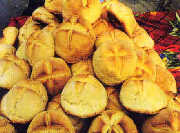
 The minority ethnic groups in Xinjiang, especially the Uighur people, like to fry nang mixed with meat in an iron pot, or prepare it in a steamer. Hot ashes are also used to make parched nang, which has a particular flavor. Some Uighurs in southern Xinjiang bake nang called "Wuqiake" (hearth) nang with the remaining heat on the walls of ordinary hearths after they boil tea and cook meals. Wuqiake nang is generally very thin, but delicious.
People of Xinjiang like to have a bit of tea with nang before breakfast, lunch and supper. In the past, it was prepared for people going off on long trips. When a husband was about to leave home on a lengthy journey, his wife would bake a nang the size of a basin the evening before he set out. In the early morning of the day he left, she cut the nang into pieces and put them into her husband's bag. In desert or gobi areas, the unspoilable nang is an excellent food to have along. It is said that Tangseng, the famous monk in the Tang Dynasty took nang with him when he traveled in the west.
 Nang plays a very important role in the lives of Uighur people. The custom of the wedding couples sharing a salty nang is still followed today. During a wedding ceremony, the host gives a bowl of salty water and a piece of Nang to each the bridegroom and bride. Eating the nang with salty water together symbolizes their promise to stay together for better or worse. Nang is also expected when guests come calling. If you are invited to the home of a Uighur family in Kuche County, the host will pile nangs of various sizes in the middle of the room, and motion for you to chow down.
How did the herdsmen who were far from home much of the year preserve their nang? It is said that when they passed the Kariz well, they threw the hardened nangs into it. Then following the direction the water-flow, they herded their livestock to the next well and retrieved their water-soaked nangs, soggy but still good to eat. Plain nang has a fine flavor, but after a taste of nang with mutton, you will realize why nangbao rou (mutton wrapped in nang) and yang rou pao mo (crumbled unleavened bread in lamb stew) are so popular. If your taste buds are truly tempted, try this: nang mixed with Xinjiang watermelon and Hami honeydew melon. We guarantee you'll
be pleasantly surprised!








 Email to Friends
 Print
Print Save
Save