China's Earliest paper money -- Jiaozi
 The
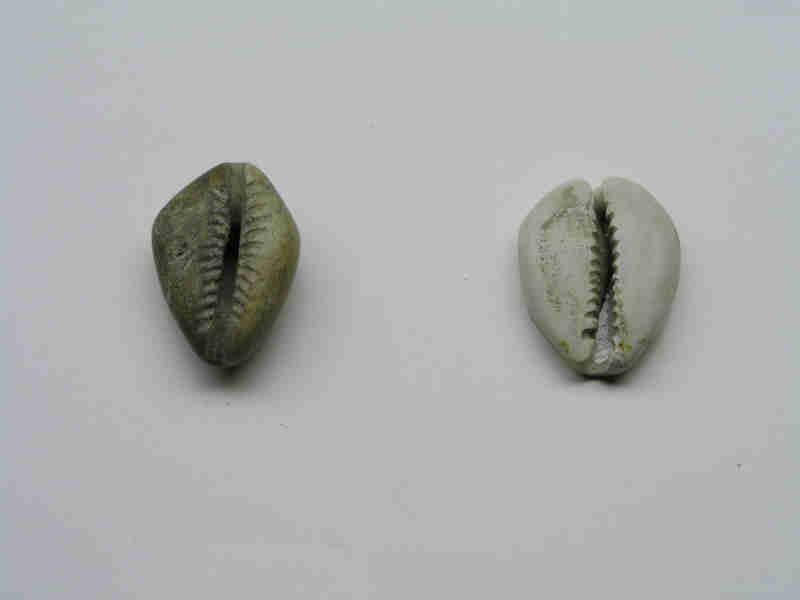
first objects to be used as money by the people of China were natural seashells.
As goods began to be exchanged with increasing frequency, the supply of
seashells often lagged behind the demand for them, and so imitation shell money
began to be manufactured from various materials including stone, jade
, bone, and copper. Around 200 BC, various metal coins appeared as a result
of the rapid development of the commodity economy. The
first objects to be used as money by the people of China were natural seashells.
As goods began to be exchanged with increasing frequency, the supply of
seashells often lagged behind the demand for them, and so imitation shell money
began to be manufactured from various materials including stone, jade
, bone, and copper. Around 200 BC, various metal coins appeared as a result
of the rapid development of the commodity economy.
The Qin
Dynasty (221-207BC), the first feudal dynasty to unify China, unified
the currencies, bringing the Ban Liang (half tael) coins into use across the
whole nation. These coins were circular in shape with a square hole through the
middle; a shape that expressed the ancient Chinese belief that heaven was round
and the earth was square.
 China was the first country in the world to use
paper
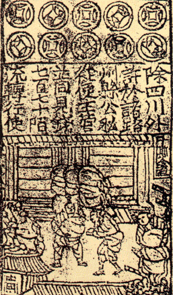
currency -- Jiaozi. The history of Jiaozi dates back to the Northern
Song Dynasty
(960-1127). China was the first country in the world to use
paper
currency -- Jiaozi. The history of Jiaozi dates back to the Northern
Song Dynasty
(960-1127).
During this time, merchants in Chengdu distributed one of the earliest known
paper money. The currency was called Jiaozi, a kind of printed-paper
certificate, to replace the iron money. With the high circulation of the
currency, the local government of Chengdu established the earliest
administrative and savings bank known as the Office of Jiaozi. The word Jiaozi
then began to be used as a general term for money. In 1023, the authority of the
Song Dynasty issued official Jiaozi while banning private issuing.
Jiaozi was the first paper money not only in China but
also around the world. Paper money proved popular in the later dynasties like
the Yuan (1271-1368), Ming (1368-1644), and Qing (1644-1911), but it had never
replaced the metal coins in circulation. The round coins with square holes
continued to be used in China for more than two thousand years, until the late
Qing
Dynasty
.
It was only in modern times that the large-scale issue of paper currency came
into being.
|




 E-Mail
This Article
E-Mail
This Article  Print
Friendly Format
Print
Friendly Format