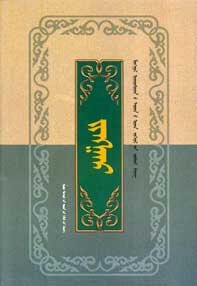
 The cradle of the Mongolian heroic epic "Janggar" is in present-day Xinjiang, northwestern China, home of the Oirat Mongols, who speak and write their own language. The cradle of the Mongolian heroic epic "Janggar" is in present-day Xinjiang, northwestern China, home of the Oirat Mongols, who speak and write their own language.
"Janggar" is one of the three major works in Mongol classical literature. A masterpiece of Mongolian oral literature, it provides an account of the hero Jiangar who bravely fights against his enemies. The epic reflects the history of the Mongolian nationality and the social life of Mongolian tribes prior to modern times.
Experts say "Janggar" can be compared to Homer's Iliad, in size, but at the same time it is an epic well adapted to a migratory culture. Each chapter is a separate story within a story, which allows for a fresh start with each storytelling.
The main story line of the epic is the battle between good (Janggar and his heroes) and evil (the Mangus or evil monster), and the achievement of a life of bliss.
"Janggar" is a masterpiece of the "Janggarchin", or individual tellers of the epic. It has been passed down orally for the ages, and it remains unclear to this day who created it or when it was created.
The first publishing of "Janggar" was in the late 1950s by the Inner Mongolia People's Publishing House, when a 13 chapter Oirat version of the more than 100 chapter Oirat Janggar Epic was published in the Oirat Mongol "clear" script. Later in the 1980's Boyinheshig, a mythologist from Inner Mongolia University, and T. Dolma spent more than a month in Xinjiang recording what would become a 15 chapter version transcribed and published in modern Mongol (Uygur-Mongol) script. Today, there are many different translated versions of the Janggar Epic in various languages worldwide.
Mongolian Jiangar is famed as one of the three greatest epics of China, together with Tibetan "Gesar" and Kirghiz "Manas." The epic can also be found in areas of Mongolia and along the path of the Volga River in Russia.
|


