
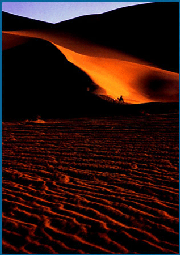
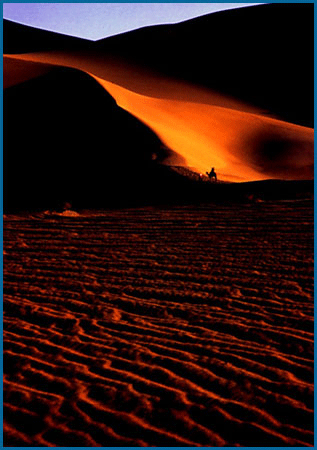
 Dunhuang and the Silk Road
Two thousand years ago,Zhang Qian(explorer and Imperial envoy) in the Han Dynasty, the pioneer of the Silk Road, explored the marvelous road to the countries west of China, paving the way for exchanges between China and Central Asia and Europe.
In an effort to guarantee the trade on the Silk Road, the Han Government set upZhangye, Jiuquan,Wuwei, and Dunhuang along the Silk Road as towns to keep the road smooth. From then on, the Silk Road witnessed the boom of commerce and trade between Chinese and foreign emissaries and merchants, while Dunhuang became a big city of international trade.
In theSui Dynasty(581-618), Emperor Yang Di held a pageant party and invited leaders from 27 countries west of China to the party, which considerably boosted the trade on the Silk Road.
When the wheel of history headed to the Tang Dynasty (618-907), the prosperity and open policies of the Tang society pushed the booming trade along the Silk Road to a height that would never again be reached.
The development of the Silk Road also drove the prosperity of the cities like Dunhuang along the road. Showered byBuddhismfor over a thousand years, Dunhuang became the most eye-catching star of the Silk Road.
Dunhuang Murals
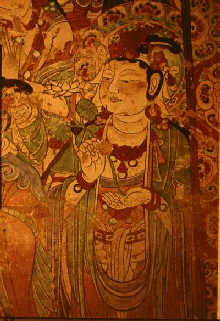
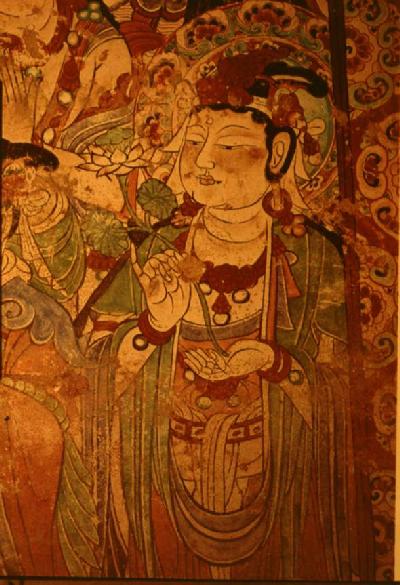
Dunhuang grottoes art is a solid art combining architecture, sculpture, and mural. Although Dunhuang murals only play a decorative and supplementary role to the sculptures in the grottoes, they feature the greatest number, the largest scale, the finest art skills, and the richest content, thereby providing very valuable information and material for research on ancient Chinese politics, economics, culture, military, geography, communication, social life, national relationship, religious history, art history, and history of cultural exchanges with foreign countries.
In the 577 grottoes with the Mogao grottoes as the principal one, there are more than 45,000 square meters of colorful murals. The grottoes have been called the biggest museum of fine arts in the world. According research findings, Dunhuang murals can be divided into several classes.









 Email to Friends
 Print
 Save