 The Theory of Five Elements
 The ancient people tended to refer to supernatural power for an explanation of any natural phenomena that they could not understand or control. Such natural power had different names in different periods in Chinese history, such as Shang Di (God) in theShang Dynasty(16-11th century BC) and Tian (Heaven) in theZhou Dynasty(11th century-256 BC). The Tian Zi (Emperor) therefore was designated by the heaven to govern the world.
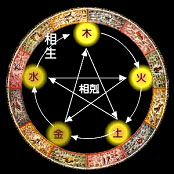
After the Zhou Dynasty, the five elements -- metal, wood, water, fire, and earth -- were thought to be the basic substance in the natural world, constituting various things, leading to the creation of the Theory of Five Elements.
Theory of Vitality
In the middle of theWarring States Period(475-221BC), Song Xing and Yi Wen, two famous philosophers at that time, brought forward the theory of vitality, explaining the world with the tiny primitive substance of Yuan Qi (vitality). According to them, Yuan Qi, invisible and untouchable, existed everywhere, and when combined, gave rise to all things in the world.
By theThree Kingdoms Period(220-280), Yang Quan, a believer in the theory of expounding appearance in the night sky, further developed the issue, saying the heaven was composed of Yuan Qi as well as all the stars.
The Theory of Chaos
As early as in the Warring States Period, there already existed philosophers who believed the heaven and earth came into being as a result of the mutual effects ofYin and Yang(opposite principles or forces existing in nature and human affairs). The book Huan Nan Zi, written by Liu An and so on during theWestern Han Dynasty(206BC-24AD), was the earliest to elaborate on the origin and evolvement of the heaven, earth, and celestial bodies.
Author: Jessie








 Email to Friends
 Print
Print Save
Save