 |
 |
 |
 |
 |
 |
|
|
|
|
|
|
| Travel in China > Natural Scenery > Rivers |
|
|
||||
 E-Mail
This Article E-Mail
This Article  Print
Friendly Format Print
Friendly Format |
||||
|
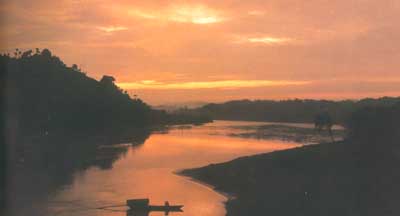
Chishui River
Along the upper and middle reaches of the river, it is abundant in water resources. The downstream water is wide, deep, and calm, suitable for transportation. It used to be a major pass for the transportation of salt in Sichuan and Guizhou provinces, and now the 120-ton ship can run on the river. It is warm and humid, suitable for growing paddy, sugar cane and cole. Along the river, agriculture is quite developed, and the region is densely populated. The region is also a major production area of bamboo and pine fir. Mines of natural gas, coal, iron, and sulphur are of great capacity.
Along the river, there are thick forest and beautiful views as well as historical relics. The Shizhangdong Fall is on the upper stream of the Fengxi River, the branch of the Chishui River. It falls 1.5 meters and is of 68 meters in width, a very typical shade fall. The Wugongyan Shili (five kilometers) Shoal is the most dangerous gorge of the middle stream, a nice place for rock climbing and drifting. |
||||
All rights reserved. Reproduction of text for non-commercial purposes is permitted provided that both the source and author are acknowledged and a notifying email is sent to us. |
||||
 |