 |
 |
 |
 |
 |
 |
|
|
|
|
|
|
| Art Q&A > Crafts |
|
|
||||
 E-Mail
This Article E-Mail
This Article  Print
Friendly Format Print
Friendly Format |
||||
|
Gu Embroidery
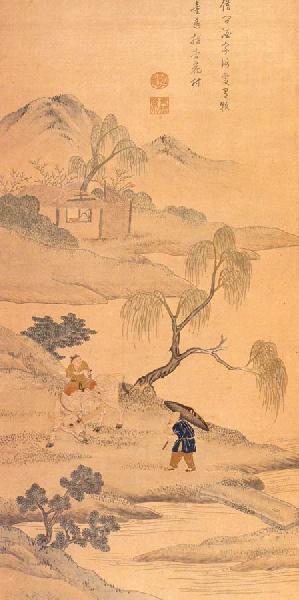
Gu Embroidery originated from the household of Gu Mingshi in Songjiang, Jiangsu Province. Gu Mingshi was a successful candidate in the highest imperial examination of the Ming Dynasty (1368-1644). In his late years he lived in Shanghai. Almost all the female members in his family would embroider. Thus Gu Embroidery came into being. Among the family members, a woman with the surname Miao and another named Han Ximeng were most skilled at embroidering.
After the death of Gu Mingshi, the living condition of the family began to deteriorate so the Gu embroidery was put onto the market. Initiated by the men of letters such as Dong Qichang in the south of the Yangtze River, some government-run or private embroidery workshop called their products Gu embroidery so as to cultivate the fame.
After the Qing Dynasty (1644-1911), Gu Embroidery was widespread in neighboring areas around Shanghai. Many women tried to imitate the skills; businesspeople opened embroidery workshops and purchased Gu Embroidery works. As a result, Gu Embroidery became famous nationwide. However, after the reign of Jiaqing (1796-1821), Gu Embroidery gradually lost its fame and almost no one mastered the skill. After the founding of new China, this skill regained some development. |
||||
All rights reserved. Reproduction of text for non-commercial purposes is permitted provided that both the source and author are acknowledged and a notifying email is sent to us. |
||||
 |