At the end of October, a group of ‘guru archeologists’ gathered in Anyang, Henan Province, to celebrate the 80th anniversary of the archeological excavation at Yin Xu, the ruins of the last capital of China's Shang Dynasty (1766-1050 BC).
80 years ago, Yin Xu, the archaeological site which had slept for more than 3,000 years ago, was brought to light with the commencement of a state-supported excavation. Decades of effort paid enormous dividends as Yin Xu represents a golden age of early Chinese culture, crafts and sciences from a time of great prosperity.
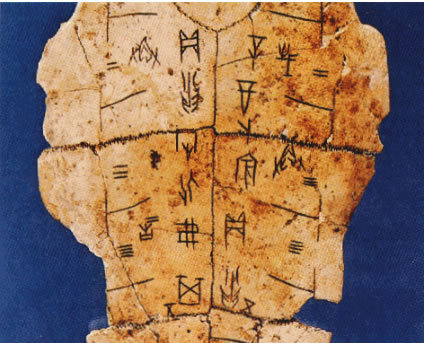
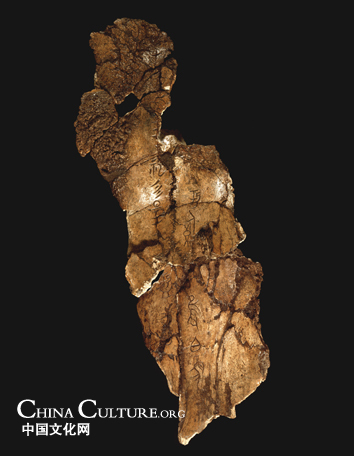
Of note it is famous for the discovery of 'oracle bones', inscriptions on animal bones and tortoise shells which are thought to be the beginnings of Chinese characters and writing. They bear invaluable testimony to the development of one of the world’s oldest writing systems, ancient beliefs and social systems.
Demystifying Chinese characters
These "oracle bones" were discovered by chance.
In 1899, Wang Yirong, director of the Imperial College of the Qing Dynasty (1644-1911), was suffering from malaria and was prescribed Longgu (dragon bones) at a traditional Chinese pharmacy. ‘Dragon bones’ were widely used in Chinese medicine and usually refer to fossils of dead animals. He noticed strange carvings on these bones and concluded that these could be samples of China’s earliest writing. He sent his assistant in search of the source of these bones and they finally traced them to the small village of Xiaotun on the outskirts of Anyang.
In 1917, Wang Guowei deciphered the oracle bone inscriptions of the names of the Shang kings and constructed a complete Shang genealogy. This perfectly matched that in the Records of the Grand Historian by Sima Qian, confirming the historical authenticity of the legendary Shang dynasty and the archaeological importance of Yin Xu.








 Email to Friends
 Print
Print Save
Save